Schools have a statutory duty to promote student wellbeing and are ideally placed to identify and deliver prevention and early intervention around child mental health. However, school staff do not generally receive training in approaches to improve wellbeing (O’Reilly et al., 2018), despite mental health disorders accounting for a large proportion of disease burden among children (NHS Digital, 2022; WHO, 2021). Furthermore, many young people feel overwhelmed by the demands of secondary school or are responded to with punishment or exclusion, compounding behaviour and attendance problems and poor relationships with school staff (Mind, 2021). Supporting schools to improve student mental health and promote positive relationships is advocated (Barker et al., 2021).
In this paper, we systematically review the evidence for solution focused practices delivered in schools by school staff without formal mental health training (e.g., subject teachers) and student peers. Solution focused brief therapy (SFBT) is a strengths-based intervention that focuses on building solutions rather than problem reduction (de Shazer, 1985). SFBT has a growing evidence base for a range of psychological and behavioural problems in adults and children (Neipp & Beyebach, 2022). SFBT has demonstrated effectiveness for child behaviour problems (Carr et al., 2017; Gong & Hsu, 2017; Gong & Xu, 2015), including conduct disorder (Kim, 2008; Stams et al., 2006) and child internalising problems including depression, low self-esteem and low self-efficacy (Franklin et al., 2022; Gong & Hsu, 2017). It is widely used in school contexts, often referred to as solution focused practice (SFP; Rhodes & Ajmal, 1995), where it supports hope, agency, resilience, and a growth mindset. Its brief, flexible nature makes it particularly well suited to educational settings, as it can be embedded into everyday interactions, peer support, and conversations with staff and students (Gingerich et al., 2012; Trepper & Franklin, 2012).
Research in schools has primarily examined individual or group SFP delivered by trained professionals (e.g., mental health professionals, social workers, school counsellors or researchers), with several systematic reviews and meta-analyses reporting positive student outcomes (Franklin et al., 2022; Gong & Hsu, 2017; Karababa, 2024; Kim & Franklin, 2009). Evidence suggests improvements in emotional wellbeing, academic achievement, conduct, and school-related behaviour problems, though findings are mixed for outcomes such as attendance and self-esteem. While some reviews report small to moderate overall effects (Franklin et al., 2022), others show large treatment effects (Gong & Hsu, 2017; Karababa, 2024), particularly for group-based interventions. These findings demonstrate SFP as a promising approach for addressing a broad range of school-related difficulties.
Although school staff deliverers have been included in previous reviews, this has not been the primary focus of reviews. Beyond the studies included in previous reviews, there is evidence that school staff without formal mental health training (e.g., subject teachers) can be trained to deliver SFP, often supported by other specialist (e.g., clinical) professionals. In the U.K., Gretton’s work in secondary schools in Bristol and Bath demonstrates how SFP can be integrated as part of a whole-school approach (Gretton, n.d.). Internationally, the School of Merit in South Africa has developed a teaching philosophy based on SFP, where students and staff are motivated by future possibilities (Birkett & Merritt, 2001). In the U.S., Metcalf has published extensively on using SFP in whole-school systems, offering staff an alternative to problem-focused discipline and instead promoting student strengths (Metcalf, 2003; Stark & Metcalf, 2025). These case-based examples evidence how SFP can be implemented both within and outside classrooms, including brief corridor conversations, visual displays (e.g., solution focused posters and resources), student assemblies, pastoral systems, and parent/ carer communication.
Previous systematic reviews have also focused primarily on experimental and quasi-experimental studies (although Kim & Franklin, 2009, included single-group studies). However, most research on SFP in schools involves single group or qualitative studies. For example, single group evaluations of the ‘Working on What Works’ (WOWW) approach; a manualised, 10-week classroom-based programme aimed at improving relationships and behaviour through shared teacher and student goal setting (Berg & Shilts, 2004). Synthesising this wider literature may offer valuable insights into intervention characteristics and implementation processes to design, implement and evaluate staff delivered programmes.
Previous reviews have also not focused on student peers implementing SFP. Peer support is often more acceptable to young people than speaking with teachers or external professionals. Furthermore, while outcomes tend to focus on student change, SFP has shown promising effects in reducing staff burnout in other settings e.g., child protection (Medina & Beyebach, 2014). In the U.K., NICE guidelines for a whole-school mental health approach include promoting staff wellbeing (NICE, 2022). Therefore, understanding the impact of training staff in solution focused techniques on staff outcomes is warranted.
Aim and objectives
The review aimed to assess evidence on solution focused school programmes delivered by school staff without formal mental health training —such as teachers or support staff – and/ or student peers, either independently or with support from professionals. Training these in-school providers may lower costs, reduce reliance on external specialists, and promote sustainable, long-term implementation.
The review’s objectives were to examine:
-
Populations: the student groups as receivers of SFP intervention and settings involved, and characteristics of the school staff and student peers as providers
-
Interventions: how school staff and peer-led solution focused programmes were delivered, including modality, number of sessions, and the qualifications of those involved; the type and duration of training provided to staff and peers
-
Comparators: the control or comparison conditions used in studies (if any)
-
Outcomes: any student, school staff or classroom/school related outcomes, the effects reported and the outcome measures used
-
Evaluation and timeframe: the study designs employed, and the duration of interventions and follow-up periods
Methodology
Protocol and Registration
The search strategy, methods of analysis, and inclusion criteria were registered on PROSPERO (CRD42023414731). Search terms were adjusted during review. The Preferred Reporting Items for Systematic Reviews and Meta-Analyses (PRISMA) standards of quality for reporting systematic reviews were used to conduct and report the review (Page et al., 2021). A completed PRISMA checklist can be provided by contacting the authors.
Eligibility Criteria
The review included published and unpublished studies reporting on SFP delivered by teachers, other school staff, and/or student peers in school settings, regardless if they were or not supported by mental health staff.
Inclusion Criteria
Participants
-
School-aged children (4-18 years, equivalent to U.K. Foundation Stage 2 and Key Stages 1-5) as recipients of SFP interventions.
-
School staff as deliverers of SFP interventions, including teachers, teaching assistants, senior leaders, administrators, and other support staff e.g., catering staff.
Interventions
-
Interventions that used SFP as a core theory, as defined by the Solution-Focused Brief Therapy Research Association (2007): “(1) conversations centred on clients’ concerns; (2) conversations focused on co-constructing new meanings around client concerns; (3) use of specific techniques to help clients co-construct a vision of a preferred future and drawing upon past success and strengths to help resolve issues.”
-
Interventions based on solution focused principles e.g., coaching approaches based on SFP.
-
Interventions whereby school staff are the sole deliverers or are supported to deliver SFP by other professionals (e.g., Educational Psychologists).
Comparator
- Any comparator or none.
Types of Study
-
Quantitative (controlled and uncontrolled) and qualitative studies.
-
No restrictions were placed on study design or geographical location.
Context/settings
-
School settings, including U.K. primary (ages 4-11), secondary (ages 11-16), and sixth form/ further education settings up to age 18 (U.S. system: K (or Kindergarten) – 12th grade).
-
We also included alternative education settings for these age groups (e.g., Pupil Referral Units).
Outcome Measures
- Any student, staff or school related outcomes.
Exclusion Criteria
-
Participants: children younger than school age (i.e., U.K. Foundation Stage 1 or U.S. pre-K (or pre-Kindergarten)); young people aged 18+ attending further or higher education settings.
-
Context: Nursery and pre-school settings; higher education settings (e.g., universities); further education settings for young people age 18+.
-
Interventions combining SFP with other approaches (such as cognitive behavioural therapy).
-
Interventions delivered exclusively by mental health or other specialist professionals whereby school staff had no involvement.
-
Non-English language studies.
Information Sources and Search Strategy
The first text on brief therapy describing the premise of a solution focused approach was published in 1974 (Weakland et al., 1974). Database searches were conducted from 1974 until June 2023 and updated in August 2023 and December 2024. Advanced searches using Medical Subject Headings (MeSH), Indexes and Subject Terms were combined with keyword and multi-field searches using the Boolean operation “OR” to provide greater database coverage and to augment the result quality. Title and abstract only searches were conducted.
Appendices A and B contains a complete list of sources and the search strategy.
Professional websites were also reviewed: www.sfbta.org (Solution-Focused Brief Therapy Research Association, 2007), https://www.ebta.eu/sf-research (European Brief Therapy Association, 1993), and https://solutionfocused.net/ (Institute for Solution-Focused Therapy, n.d.).
The reference lists of existing systematic reviews (Franklin et al., 2022; Gong & Hsu, 2017; Karababa, 2024; Kim & Franklin, 2009) were hand-searched for primary studies that met the inclusion criteria.
A full search strategy can be found in Appendix B.
Study Selection
Search results were exported to EndNote (The EndNote Team, 2023) and duplicate records were removed, both automatically and by hand. Two reviewers (KGJ & FR) independently screened titles, abstracts, and full text against the inclusion/exclusion criteria, keeping separate EndNote files throughout. Inter-rater agreement was assessed using Cohen’s kappa (Cohen, 1960), indicating substantial agreement (k=0.8). Discrepancies were discussed and reconciled in meetings between all authors. Studies were initially separated by source (electronic databases, grey literature sources, hand searched) in preparation for data extraction. For studies that we were unable to retrieve the full text for, study authors were contacted. However, no full texts were retrieved via this method.
Data Extraction and Data Items
A data extraction form was developed based on the Joanna Briggs Institute (JBI) data extraction tool (Joanna Briggs Institute, 2017). Data from included studies was extracted and recorded on a standardised Excel form. Extracted information included: study identification features (e.g., title, authors); characteristics (aims/objectives; design; inclusion/exclusion criteria; recruitment and randomisation procedures); setting; intervention and control conditions; study population, participant demographics; outcomes and times of measurement; measurement tools and statistical techniques; themes for qualitative experience outcomes; suggested mechanisms of intervention action; information for risk of bias assessment. Maintenance effects were extracted, defined as any outcomes measured post-intervention. This included the measure, time point, and source (teacher, student, or records). Maintenance data were synthesized narratively. Two reviewers extracted data independently. Discrepancies were resolved through discussion with a third reviewer.
Data was extracted by one reviewer (KGJ) and subsequently checked by another (FR). All extractions were considered by a third reviewer (RM) before final selection.
Where data was not available in the source paper, reference works, appendices, citations, and supplementary material were sought to fill in the gaps. Study investigators were contacted regarding missing data about participant numbers (n=3 studies), although no responses were received.
Risk of Bias Assessment
The Mixed Method Appraisal Tool (MMAT) (Hong et al., 2018) was used to assess the quality of included studies. MMAT is designed to appraise the methodological quality of five categories of empirical studies, namely: qualitative; RCTs; non-RCTs; quantitative descriptive studies; and mixed methods studies. Reviewers rate against the criteria of the chosen category (e.g., for qualitative studies, reviewers rate against the qualitative criteria only and not against the RCT criteria). Two reviewers (KGJ & FR) independently assessed risk of bias and results were reconciled to produce final quality scores. Inter-rater agreement was assessed using Cohen’s kappa (Cohen, 1960), indicating near perfect agreement (k=0.85).
MMAT scoring was adapted to generate a percentage of total responses scored “Yes” against the seven MMAT questions, generating a percentage score. Following this, the scores were given a star rating (Mixed Method Appraisal Tool, 2020). This is an overall quality score, such that: 5 stars =100% quality criteria met; 4 stars = 80% quality criteria met; 3 stars = 60% quality criteria met; 2 stars = 40% quality criteria met; and 1 star = 20% quality criteria met. Scores were rounded to the nearest ten, and where the figure still fell between two ratings (e.g., at 90%), a lower rating was taken.
Synthesis Methods
A narrative synthesis was conducted, structured around population characteristics, intervention content and delivery format; outcomes; programme evaluation. Due to the heterogeneity of the data, a meta-analysis was not feasible. As this was a narrative synthesis, subgroup and subsets were not specified in advance. However, outcomes were presented separately for students and school staff.
Results
Study Selection
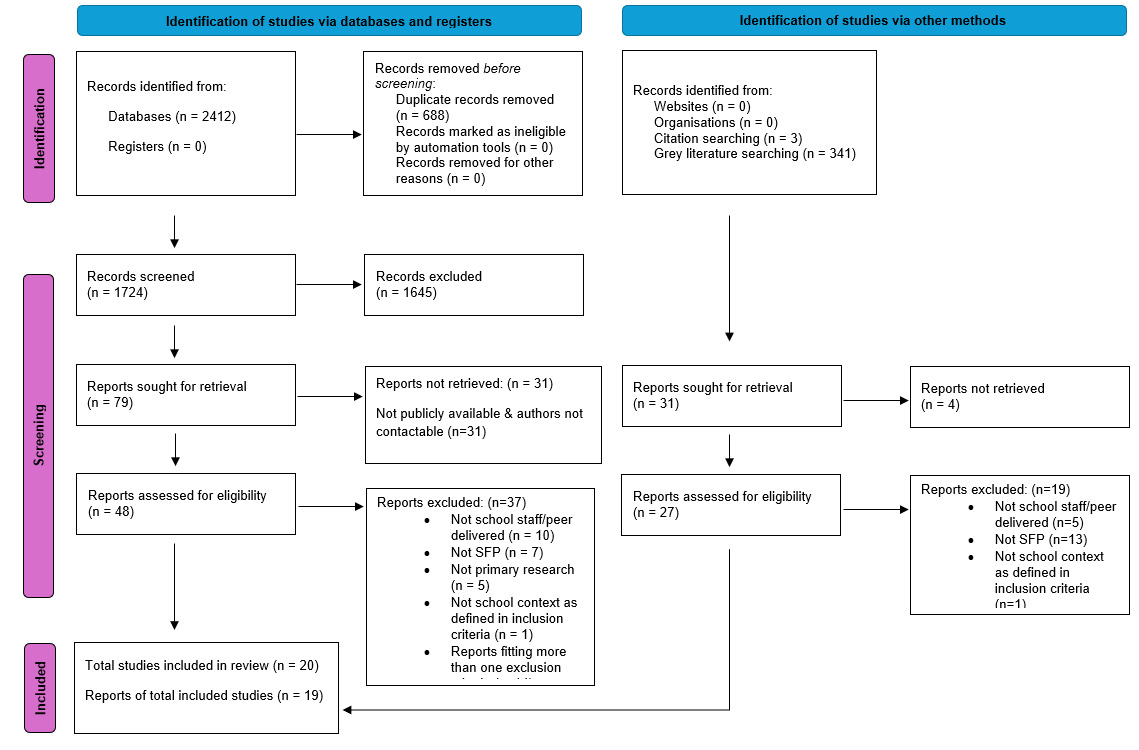
Nineteen reports, containing twenty studies, met the inclusion criteria and were included (Figure 1 PRISMA flow diagram).
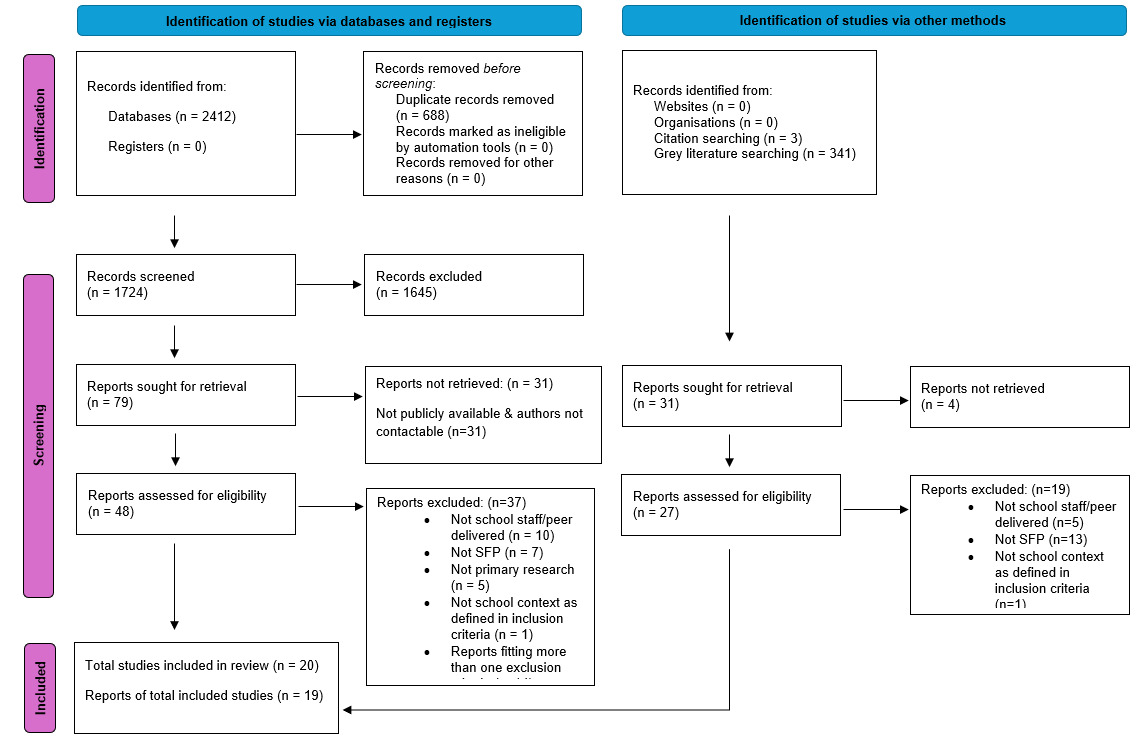
Following title and abstract screening, 48 reports were assessed for full eligibility from electronic databases. Of these, 37 were not included in the final selection. From other sources, 27 reports were assessed for eligibility of which 19 were excluded (see Figure 1).
Risk of Bias
MMAT ratings are summarised in Table 1. Of the twenty studies, seven were rated as 5 star (35%), one as 4 star (5%), eight as 3 star (40%), and four as 2 star (20%). Methodological shortcomings included lack of a control or comparator group (75%) or validated measures (69% of studies that included quantitative measures).
Study Characteristics
Study characteristics are presented in Table 1 (see supplementary material).
Populations
In total, a minimum of 957 students and 74 school staff were included, comprising teachers, teaching assistants, head teachers, and support staff. Three studies did not specify participant numbers.
Eleven studies were conducted in the U.K., eight in the U.S., and one in Finland and China. Ten studies were conducted in schools for younger students aged 5-11, seven in schools for older students aged 10-18, and three studies encompassed broader student age ranges (aged 5-14).
Study Designs and Comparators
Only one, post-test only, randomised controlled trial (RCT) was identified, trialling the WOWW intervention in 30 classrooms (students aged 9-11) in 10 U.S. schools (Wallace et al., 2020). Outcome measures of intervention and control groups were compared between groups instead of to pre-test data. Three studies used quasi-experimental designs (Franklin et al., 2007; Kelly et al., 2011; Moore, 2002). The remaining studies were either qualitative (n=7), including action research studies (George, 2005; Henderson, 2014; Khan, 2015; Lagana-Riordan et al., 2011; Simm & Ingram, 2008; Streeter et al., 2011; Szlyk, 2018), or single group evaluations, often with a qualitative component (n=9) (Brown et al., 2012; Burns & Hulusi, 2005; Fernie & Cubeddu, 2016; Kelly et al., 2011; Lee & Gavine, 2003; Lloyd et al., 2012; Niu & Niemi, 2020; Pitt, 2018; Watson & Hayes, 2024.
Intervention Programme, Modalities and Timeframes
Whole-school Programmes
Four studies involved Solution Focused Alternative Schools (SFASs), where SFP is embedded into school culture, rather than a time limited programme (Franklin et al., 2007; Lagana-Riordan et al., 2011; Streeter et al., 2011; Szlyk, 2018). All staff are trained in SFP, including cleaners and catering staff. Staff support students to work towards goals in a self-paced curriculum.
Whole-class Programmes
Seven studies (including two pilot studies reported by Kelly et al., 2011) used the WOWW intervention as a whole-class intervention. WOWW involves a 10-week whole-class programme of around one-hour weekly sessions.
Six WOWW studies included the full 10-week intervention as described by Berg et al. (2004). Fernie et al. (2016) used a truncated 6-week WOWW intervention with twice weekly sessions. Other adaptations included ‘noticing cards’ midway through the programme, given to children who displayed positive behaviours (Lloyd et al., 2012).
Another study used the ‘skilful-class method’; students used ‘skills cards’ to practice socio-emotional and self-management skills (Niu & Niemi, 2020). In Lee et al.'s (2003) ‘Notice How You Learn’ intervention, students recorded views on spelling and punctuation progress using a solution focused pro forma.
A further study was a teachers’ reflective account of using SFP with a class of 13-14 year olds, identifying ‘exceptions’ to problems (Henderson, 2014).
Group-based Programmes
One study used six group-based weekly sessions, whereby students role-played their future hopes with peers (Burns & Hulusi, 2005). A further WOWW study adapted the whole-class intervention for use with a group of five students (Pitt, 2018).
Individual Programmes
One study trained school staff in a manualised solution focused intervention for use with individual students (Watson & Hayes, 2024). The remaining studies used a combination of formats, including individual sessions with students and parents; teacher training and consultation; and teachers encouraging students to support peers (George, 2005; Khan, 2015; Moore, 2002; Simm & Ingram, 2008).
Intervention Deliverers
Six studies involved school staff solely delivering interventions (Franklin et al., 2007; Henderson, 2014; Lagana-Riordan et al., 2011; Niu & Niemi, 2020; Streeter et al., 2011; Szlyk, 2018). For whole-school interventions (the SFASs), all staff (including support staff and senior leaders) delivered the intervention. For classroom, group-based, and individual interventions, teachers were involved in delivery. Teachers were supported to deliver interventions by other education professionals (e.g., Educational Psychogists or Special Educational Needs Co-Ordinators (SENCOs), n=5); researchers (n=4); coaches (n=4); and therapists (n=1) (some studies fell in more than one category). Student peers were trained to deliver the intervention in two studies (in addition to school staff).
Training and Supervision
In 12 studies, school staff training included an introductory session (ranging from an hour to a day in length) plus ongoing consultations/observations, which acted as supervision. In SFASs, where SFP is embedded into the school culture, training and supervision is an ongoing process for all staff. A further study described the delivery of a solution focused training course for primary school staff over a 9-week period (George, 2005). Teachers in this study favoured a whole-school approach to solution focused teacher development, with initial external support and then ongoing supervision provided internally (George, 2005).
Outcomes
Studies assessed student, staff and classroom outcomes, along with student and staff relationships (Table 1).
Student and Classroom: Behavioural Outcomes
Eleven studies examined changes in classroom behaviour (MMAT 2–5 stars). Four used quantitative methods (Kelly et al., 2011; Moore, 2002; Wallace, 2020; Watson & Hayes, 2024), two were qualitative (Henderson, 2014; Khan, 2015), and five used mixed methods (Brown et al., 2012; Fernie & Cubbedu, 2016; Lloyd et al., 2012; Niu & Miemi, 2020; Pitt, 2018). Most were whole-class, teacher-delivered interventions (with support) (n=7), plus three individual interventions and one group-based.
Seven studies used both teacher and student behaviour ratings; four used teacher ratings only. Reported improvements included better listening, greater politeness and respect, and improved temper control (Brown et al., 2012; Burns & Hulusi, 2005; Fernie & Cubeddu, 2016; Lloyd et al., 2012; Moore, 2002; Niu & Niemi, 2020; Watson & Hayes, 2024). Students were also described as more self-motivated to manage behaviour (George, 2005; Henderson, 2014; Niu & Niemi, 2020) and more focused/on-task (Niu & Niemi, 2020; Pitt, 2018). In the RCT, teachers in the WOWW group rated their classrooms as significantly improved in terms of general performance (using a rating scale of 1-10 with 10 being “the best”) post-intervention (p < .05; d = 0.25) compared with controls.
In the three studies with follow-up periods, behaviour gains were maintained or increased 1–18 weeks post-intervention (Brown et al., 2012; Moore, 2002; Pitt, 2018).
Several studies lacked significance testing due to small samples (Brown et al., 2012; Burns & Hulusi, 2005; Pitt, 2018), though authors noted consistent positive trends.
Student and Classroom: Emotional Outcomes
Three studies assessed changes in students’ emotional health (MMAT 3–5 stars): two quantitative (Moore, 2002; Wallace et al., 2020) and one mixed-methods (Pitt, 2018). Intervention formats were evenly split across whole-class, individual, and group-based approaches. All were teacher-delivered (with support) with both student and teacher ratings.
The RCT found no significant differences between WOWW and control groups on anxiety, sense of irrelevance, hyperactivity, or impulsivity (Wallace et al., 2020). Similarly, a quasi-experimental study reported non-significant effects on internalizing behaviours (Moore, 2002). In contrast, the mixed-methods study reported reduced teacher-rated anxiety post-intervention and at 1–2 and 6-week follow-up (Pitt, 2018), though no significance testing was conducted due to the small sample (n=5).
Student and Classroom: Relational Outcomes
Nine studies reported improvements in classroom and peer relationships (MMAT 2–5 stars). Two used quantitative designs (Kelly et al., 2011; Wallace et al., 2020), three used qualitative methods (Henderson, 2014; Lagana-Riordan et al., 2011; Szlyk, 2018), and four used mixed methods (Brown et al., 2012; Fernie & Cubeddu, 2016; Lloyd et al., 2012; Niu & Niemi, 2020). Seven studies involved whole-class, teacher-led interventions (with support), and two were whole-school, all staff interventions. Relationship outcomes were assessed through teacher and student ratings (n=4), teacher-only ratings (n=2), and qualitative accounts from teachers (n=1), students (n=1), or both (n=1).
Across studies, outcomes included improved collaboration and more positive peer and teacher relationships (Brown et al., 2012; Fernie & Cubeddu, 2016; George, 2005; Kelly et al., 2011; Lloyd et al., 2012; Niu & Niemi, 2020). Qualitative findings suggested students showed greater responsibility and stronger relationships compared with traditional school settings (Lagana-Riordan et al., 2011; Szlyk, 2018), and perceived teachers as more caring and less punitive (Lagana-Riordan et al., 2011). Szylk’s (2018) grounded theory study attributed behavioural and relational improvements to teachers’ modelling of social responsibility, promotion of independence, and co-construction of a collaborative, trusting school culture.
Student Outcomes: Perceptions of the Intervention
Five studies explored student and teacher perceptions of the interventions (MMAT 3–5 stars: (Burns & Hulusi, 2005; Fernie & Cubeddu, 2016; Khan, 2015; Lagana-Riordan et al., 2011; Szlyk, 2018). Two were whole-school interventions; the others were whole-class (n=1), individual (n=1), or group-based (n=1), all delivered by teachers with professional support.
Mixed-methods WOWW studies found that students enjoyed the intervention and noticed positive personal changes, including greater confidence about their future (Burns & Hulusi, 2005; Fernie & Cubeddu, 2016). SENCOs viewed SFP as helpful for reintegrating students after crises and fostering optimism (Khan, 2015). Qualitative findings indicated that SFAS students felt more mature, responsible, and in control (Lagana-Riordan et al., 2011), and teachers believed a culture of social responsibility supported improved student emotional health (Szlyk, 2018).
School Related Outcomes: Academic Attainment
Four quantitative studies examined academic attainment (Franklin et al., 2007; Kelly et al., 2011; Lee & Gavine, 2003; Wallace et al., 2020), and one concept-mapping study identified factors students believed supported their success—school culture, relationships, and goal-setting (Streeter et al., 2011). MMAT ratings ranged from 3–5 stars. Three studies were whole-class, teacher-delivered interventions; one was a whole-school intervention, delivered by all staff and student peers. Academic outcomes were measured using student records (n=3) and student/teacher ratings (n=2) (one study used both).
Two studies found positive academic effects: primary students completing a solution-focused pro forma scored significantly higher on spelling and punctuation tests (Lee & Gavine, 2003), and students in a SFAS earned significantly more credits over time than those in a traditional school (Franklin et al., 2007; p < .01, g = 0.4).
Two studies reported no academic impact: Kelly et al. (2011) found no differences in grades or test scores between WOWW and control classrooms, and the RCT detected no significant differences in reading or maths attainment (Wallace et al., 2020).
School Related Outcomes: Attendance
Three quantitative studies assessed the impact on school attendance (MMAT 3-5 stars). Two were whole-class interventions and one was whole-school, delivered by all staff and student peers. In Wallace et al.'s (2020) RCT, WOWW students had significantly fewer school absences (p < .05, d=0.13). One quasi-experimental study found reduced absences and lateness in six WOWW classrooms (Kelly et al., 2011, p<.01). Contrastingly, Franklin et al.'s (2007) quasi-experimental study found that attendance rates at a SFAS were lower than in the comparison school.
Staff Outcomes: Teacher Confidence and Classroom Management
Five studies examined teachers’ perceived classroom management, confidence, and self-efficacy (MMAT 2–4 stars): three mixed-methods and two quantitative. All were whole-class, teacher-delivered interventions with professional support.
Teachers reported increased confidence (Brown et al., 2012; Fernie & Cubeddu, 2016), greater effectiveness as classroom managers (Kelly et al., 2011), and improved classroom control (Lloyd et al., 2012). However, the RCT found no significant effect on teacher efficacy (Wallace et al., 2020). Action research studies suggested enhanced confidence and classroom management when using solution focused techniques (George, 2005; Henderson, 2014; Khan, 2015; Simm & Ingram, 2008).
Staff Outcomes: Quality of Relationships
One qualitative study in a SFAS explored teachers’ perceptions of how SFP impacted the quality of their relationships with students. Szlyk (2018) proposed that teachers had increased sensitivity to their students, making them more aware of student growth opportunities.
Another whole-class intervention reported teachers’ perceptions that their relationships with parents were more positive post-intervention (Niu & Niemi, 2020).
Discussion
Summary of Findings
This review aimed to assess evidence on solution focused school programmes delivered by school staff —such as teachers or support staff – and/ or student peers, either independently or with support from professionals. Twenty studies were identified (19 publications) involving at least 957 students and 74 school staff or peers delivering solution focused practice (SFP) in schools. Only one RCT was identified, demonstrating the limited rigorous evidence base for school staff and student peer delivered SFP in schools. Most studies were single group evaluations (n=9) and/or used qualitative methods (n=7). The lack of control or comparator group means that improvements cannot definitively be attributed to the intervention. Seven studies were unpublished doctoral dissertations. Over half of studies (60%) met 60% or less of MMAT quality criteria, reflecting generally low methodological rigor. The reliability of the review’s findings is limited by this low methodological rigor; consequently, the findings should be interpreted cautiously and highlight the need for more rigorously designed future research.
Studies were primarily conducted in the U.K. or U.S. Given that a large proportion of studies using SFP with children and adolescents, and indeed in schools, are conducted in Eastern countries (Franklin et al., 2022; Zak & Pekala, 2025), this could suggest that specialist providers may be preferred in studies in Eastern countries. Alternatively, the low representation of Eastern studies may be connected to the reviews’ exclusion of non-English publications.
Interventions were heterogenous, using different modalities (whole-school, whole-classes, group-based or individual students) and of varying lengths (ranging from time-limited interventions lasting between 4 and 10 weeks, to open-ended interventions). Only two group-based studies were identified (Burns & Hulusi, 2005; Pitt, 2018). More studies (n=10) involved younger children, compared to older students (n=7) and mixed age groups (n=3). Potentially, this could reflect a desire for programme designers to intervene earlier, or alternatively that younger children are easier to engage in school-based research.
Classroom-based WOWW programmes were most common for younger students, with a focus on working towards improvements in classroom behaviour and relationships. The full intervention involves a 10-week whole-class programme of one-hour weekly sessions. Coaches observe the class and provide positive feedback against collaborative teacher and student goals (Berg & Shilts, 2004). Other studies involving younger students comprised whole-class programmes aimed at improving academic performance (Lee & Gavine, 2003) or socio-emotional skills (Niu & Niemi, 2020). Whole-class interventions (as opposed to individual interventions) may be preferred in schools as students are already organized in classrooms. It may also be more time-effective to include more students in the programme at once, while using the limited staff resources there is.
For studies involving older students (aged 10-18), the most common intervention was a whole-school approach in U.S.-based SFASs (n=4). These adopt a strengths-oriented teaching philosophy and a solution focused culture of change for students at risk of exclusion. All staff are trained in SFP and facilitate students to work towards individualized goals e.g., a sense of responsibility and improved behaviour and relationships at school. Qualitative studies theorised that change is produced by teachers modelling social responsibility, fostering independence and encouraging student problem-solving skills (Szlyk, 2018). Compared to traditional state schools, these schools may build more personal and caring student-staff relationships (Lagana-Riordan et al., 2011). Although the evidence-base for SFASs is limited, a teaching philosophy emphasizing student strengths may improve the overall school climate.
Multi-component approaches—including individual sessions, peer support, and teacher training—demonstrate flexible delivery across contexts (George, 2005; Khan, 2015; Moore, 2002; Simm & Ingram, 2008). This is consistent with previous systematic reviews on SFP in schools, which have identified a variety of intervention modalities (Franklin et al., 2022; Kim & Franklin, 2009). Given that multi-component programmes are advocated in UK government guidelines for promoting whole-school mental health, there is a need for more complex, multi-faceted evaluations of such interventions (Wignall et al., 2022).
Most studies involved school staff delivering alongside other professionals (n=14). Specialist education staff – Educational Psychologists and SENCOs – frequently supported other school staff (n=5). Only six studies involved school staff as the sole deliverers of interventions (Franklin et al., 2007; Henderson, 2014; Lagana-Riordan et al., 2011; Niu & Niemi, 2020; Streeter et al., 2011; Szlyk, 2018). This finding may reflect a pragmatic recognition of the challenges of implementation fidelity when school staff deliver programmes independently. Involving external facilitators, particularly during early stages of implementation, may be an important recommendation for maintaining programme integrity. School staff typically received a brief introductory training session followed by ongoing external supervision. The short training length could reflect the limited capacity that schools have for releasing staff for training around the academic timetable. One study using a 1.5 hour training session found that fidelity was low (Watson & Hayes, 2024), suggesting more intensive training may be necessary. Programme designers should collaborate with school leaders to ensure training and supervision are prioritized and consistently integrated within timetable constraints.
No studies exclusively trained students to support their peers in classroom conversations. Instead, the two studies using peer support integrated this into other delivery formats (Franklin et al., 2007; Simm & Ingram, 2008). There are several potential explanations for this. First, that peer support may not be preferred by younger school-aged children, which was the predominant group researched by studies. Alternatively, it is conceivable that school staff have limited confidence in adopting peer support approaches. Peer support is identified as a promising use of SFP in schools and may be more acceptable to young people (Ajmal & Ratner, 2019). Training students to be facilitators could provide them with new skills and increase future employability. Furthermore, only two studies included parental involvement (Niu & Niemi, 2020; Simm & Ingram, 2008). As whole-school mental health approaches include engagement with the school community, parental input into intervention delivery warrants further investigation.
In terms of outcomes, most studies explored classroom-level changes in student behaviour (n=11) and relationships (n= 9), using student and teacher ratings. WOWW studies reported improvements in behaviours such as listening skills, being more polite and respectful and collaborative working. In contrast, changes in emotional health (e.g., internalizing behaviours such as anxiety and depression) were explored less often (n= 3). Previous reviews of SFP in schools have identified substantially more studies assessing emotional problems as outcomes (Franklin et al., 2022; Gong & Hsu, 2017; Kim & Franklin, 2009). This perhaps indicates that the literature on school staff delivered SFP – often delivered in whole-class format - has paid greater attention to improving classroom behaviour and relationships. The WOWW RCT study did assess changes in mental health and behavioural outcomes and found no differences between intervention and control groups in anxiety, hyperactivity, and impulsivity (Wallace et al., 2020). However, this might be expected given that WOWW is a whole-class programme rather than targeting individual student mood and behaviour.
Limited studies assessed academic attainment (n=4) and attendance (n=3) as outcomes, demonstrating mixed results (Franklin et al., 2007; Kelly et al., 2011; Lee & Gavine, 2003; Wallace et al., 2020). The RCT study found no significant differences between intervention and control groups in academic performance, but improved attendance rates in the intervention group (Wallace et al., 2020). Again, no impact on academic performance might be expected given that WOWW aims to improve classroom relationships and behaviour.
Limited studies (n=5) examined changes in teachers’ perceived classroom management skills, confidence and self-efficacy (Brown et al., 2012; Fernie & Cubbedu, 2016; Kelly et al., 2011: Lloyd et al., 2012; Wallace et al., 2020), suggesting further research attention is warranted. Whole-school mental health programmes aim to improve outcomes for the whole-school community, beyond exclusively student outcomes (NICE, 2022). Furthermore, studies in child protection settings have found that SFP significantly improves staff burnout, team mood and atmosphere (Medina & Beyebach, 2014). Conceivably, equipping school staff with SFP training could improve staff solution thinking and confidence in having better conversations with young people, in turn improving staff job satisfaction.
Only three studies included follow-up periods (Brown et al., 2012; Pitt, 2018). These were commonly shortly (1-6 weeks) after the intervention; only one study examined maintenance effects over a longer time, 18 weeks post-intervention (Brown et al., 2012). Given the current evidence, we are therefore unable to conclude that school staff delivered solution focused interventions have long-term impacts on student and staff outcomes.
Strengths and Limitations
This review used a systematic approach with a wide search strategy to identify studies, and double screened titles, abstracts and full texts, thus limiting the risk of systematic bias. Meta-analysis was not appropriate due to the lack of randomised trials in this area. A limitation is the number of studies identified in database searches that we were unable to retrieve, despite contacting the authors (Figure 1). This means there are potential eligible studies being conducted in this area that we were unable to include.
The inclusion of low- and moderate-quality studies influenced the reliability of the review’s findings. These studies often exhibited methodological limitations—including risk of bias, lack of control/ comparison group, and small sample sizes. Most studies had little to no long-term follow up, which precluded conclusions about sustainability of outcomes. Consequently, the conclusions drawn from this review should be interpreted with caution, and higher-quality research is needed to confirm these findings.
Implications
This review identified the potential of training school staff to deliver SFP. There is a clear need for more methodologically rigorously designed studies in this area, including RCTs. Other promising studies are currently underway, but results are yet to be published. For example, the SIM Method in Sweden (group-based coaching in secondary schools) is being assessed for feasibility. School mentors are trained to deliver the intervention and a digital platform offers real-time feedback on group discussions (SIM Sweden, 2024). Future research should use larger samples, validated outcome measures and include longer follow-up periods. To enhance intervention sustainability, researchers should consider co-designing interventions with school stakeholders, including consultation with parents/carers (O’Reilly et al., 2018; authors details removed) and consider effects on managing classroom behaviour, staff wellbeing along with the wider system, i.e., school culture and relationships with parents.
Conclusions
School staff can be trained to deliver SFP in schools, either as primary providers or in collaboration with other professionals, with evidence of student and teacher rated improvements in classroom behaviour and relationships. Training school staff and students may reduce costs of expensive external specialist professionals and embed in-house expertise, optimising sustainability. There is a clear need for research of higher methodological quality - in particular larger, randomized studies with longer follow-up periods - to advance the evidence base on school staff and peer delivered SFP in schools.
Ethical Information
The research study did not involve human participants and/or animals, and therefore informed/parental consent/assent was not required/applicable.
Study Funding
No external funding was received for this work.
Author Contributions
All authors contributed to the study conception and design. The initial idea came from FR and RM. Material preparation, data collection and analysis were performed by KGJ and FR. RM critically reviewed the work. The first draft of the manuscript was written by KGJ and all authors commented on previous versions of the manuscript. All authors read and approved the final manuscript.
Conflicts of Interest
The authors have no relevant financial or non-financial interests to disclose.
The authors have no competing interests to declare that are relevant to the content of this article.
All authors certify that they have no affiliations with or involvement in any organization or entity with any financial interest or non-financial interest in the subject matter or materials discussed in this manuscript.
The authors have no financial or proprietary interests in any material discussed in this article.