Solution-focused brief therapy (SFBT) is a unique approach focused on building towards a person’s preferred future by engaging their own strengths, resources, and creativity (Lee & Eads, 2024), with a growing body of evidence supporting the effectiveness of SFBT (Vermeulen-Oskam et al., 2024). Unlike many evidence-based treatments grounded in a priori theories, SFBT traces its origins to an inductive process of observing what works in therapy, with an underlying philosophy and perspective informed by meta-theories including social constructivism, systems theory, and a strengths perspective (de Shazer, 1994; de Shazer et al., 1986, 2021). Notably, SFBT can also be considered a “way of thinking” about clients and their situations (Greene & Lee, 2011), which extends beyond skill-based conceptualizations of delivering and monitoring an intervention approach. Though SFBT is associated with a common set of skills that have been compiled into an intervention manual (Solution Focused Brief Therapy Association (SFBTA) Research Committee, 2025), other solution-focused scholars have proposed a more description-oriented application of SFBT beyond the techniques listed in the manual (Froerer et al., 2023; McKergow, 2016). Consequently, a broader view of the techniques used in applying SFBT is important for assessing SFBT practice.
Solution-Focused Orientation and Skills
At its core, SFBT upholds major premises informing a solution-focused therapeutic process that are further supported by various skills and techniques (Franklin et al., 2017). Informed by systems theory, SFBT assumes that change is always occurring within the client’s system and that change in any part of the system will influence the entire system (De Jong & Berg, 2013; de Shazer et al., 2021; von Bertalanffy, 1969). Drawing from a strengths-perspective, SFBT believes that all people are capable of change and have the strengths, resources, and wisdom needed to make positive change happen in their life (Greene & Lee, 2011; Saleeby, 1992). Finally, from a social constructivist perspective, SFBT believes that every person has their own unique view of reality and that the therapeutic process involves co-constructing a new reality through the use of language (Franklin et al., 2017; Lee & Greene, 2009). Together, these principles have key implications for a solution-focused orientation (de Shazer et al., 2021; Greene & Lee, 2011):
-
Solutions are not necessarily related to the problem
-
Small positive changes are already occurring that can offer clues for fostering bigger changes
-
Clients are the experts on their own life and the most helpful ideas for change will come from clients themselves
-
Describing the preferred future in detail helps to make it more likely to happen
These aspects of a solution-focused mindset inform and exist alongside the techniques developed to put them into action (Yates & Lee, 2021).
In addition to a solution-focused orientation, solution-focused skills involve the ability to engage clients in a collaborative process of solution-building to move toward their preferred future (De Jong & Berg, 2013). Among the major categories of SFBT techniques are strengths-oriented techniques, future-oriented techniques, and co-constructive communication techniques, with process research supporting the usefulness of these types of skills for effective SFBT practice (Franklin et al., 2017). There has been discussion and debate in the literature regarding specific techniques often associated with SFBT, yielding both specific and broad definitions of SFBT skills (Lehmann & Patton, 2011; McKergow, 2016). Specific techniques included in the SFBT treatment manual and various conceptualizations of SFBT fidelity include the miracle question, scaling, exceptions, compliments, relationship questions, goal setting, and a therapeutic break, among others (Lehmann & Patton, 2011; SFBTA Research Committee, 2025; Yates & Lee, 2021). Others have argued that some specific SFBT techniques such as a therapeutic break and between session tasks are remnants of family therapy approaches that preceded and influenced the development of SFBT and suggest metaphors of “rooms” and “tools” to stimulate solution-focused conversations with language emphasizing “best hopes” and “instances” rather than miracles and exceptions (Froerer et al., 2023; McKergow, 2016).
Given the social constructivist origins of SFBT, the exact language of an SFBT session should be grounded in the meaning-making of the client (Greene & Lee, 2011; Lee & Greene, 2009), and process research affirms that co-construction of meaning and focusing on strengths are key elements of effective SFBT that may be achieved through various specific techniques (Franklin et al., 2017). Ultimately, therapist competence in SFBT should be reflected in the ability to put these principles into action through effective use of techniques that align with the solution-building process.
SFBT Implementation and Providers’ Perceived Competence
Once an intervention has been supported by a large base of evidence regarding its effectiveness, it is appropriate to give attention to training and implementation support to encourage practitioners to adopt the intervention and use it effectively (Bhattacharyya et al., 2009; Proctor & Rosen, 2008). At this point, the outcomes of interest shift from the effectiveness of the intervention itself to the extent to which the intervention is adopted and used by providers and the ability of providers to practice the intervention with fidelity (Proctor et al., 2011). SFBT has now been supported by a worldwide literature base of efficacy and effectiveness research (Neipp & Beyebach, 2024; Vermeulen-Oskam et al., 2024), but there is currently limited literature on the best approaches for supporting implementation of SFBT (see Eads et al., 2026). Among implementation constructs, fidelity monitoring has received the most attention in the SFBT literature as it is also relevant for randomized controlled trials and intervention research (Cooper & Johnson, 2025; Yates & Lee, 2021). To aid assessment of the outcomes of SFBT implementation, measures are needed that can capture whether providers perceive themselves as having the skills needed for effective SFBT practice.
An important construct related to implementation is a providers’ self-perceived competence in an evidence-supported practice, with self-perceptions enabling baseline measurement before training has been provided and with the expectation that higher perceived competence is associated with actual utilization of the practice (Ruzafa-Martinez et al., 2013). Prior literature has conceptualized perceived competence as comprising interrelated dimensions of skills, knowledge, and attitudes, with self-perceived competence in general evidence-based practice previously operationalized in an established self-report measure (Labrague et al., 2019; Ruzafa-Martinez et al., 2013). For SFBT specifically, attitudinal factors align most closely with a solution-focused orientation informed by the systemic and constructivist perspectives that solutions are unrelated to problems and change is always occurring (de Shazer et al., 2021; Greene & Lee, 2011). As noted previously, there is debate in the literature regarding the specific skills and techniques that should be utilized when putting a solution-focused orientation into practice (2016; SFBTA Research Committee, 2025), so a conceptual domain of knowledge and skills in SFBT competence should be defined broadly enough to encompass different forms of SFBT. Applied to SFBT training and implementation, a measure of provider self-rated competence in SFBT, rather than intervention fidelity focused on a specific session, can help measure the outcomes of SFBT training and implementation to assess their effectiveness.
Existing Solution-Focused Measures
Among the large base of literature on measures and instruments in psychology and other disciplines, there is a sizable number of measures that have been developed for strengths-based outcomes generally with fewer focusing on SFBT specifically (S. A. Smock, 2011). The Solution-Building Inventory (SBI; S. Smock et al., 2010) was developed specifically for SFBT and consists of 14 self-report items on a client’s ability to identify exceptions, solutions, and a hopeful vision of their future. The SBI has been assessed for its psychometric properties and shows evidence of validity for use in research and practice settings (Smock Jordan, 2014). Another client-focused SFBT measure is the Solution-Focused Core Constructs Scale (Cooper & Johnson, 2025), a 5-item measure completed by clients to assess changes in key solution-building domains including hope for the future and ability to recognize one’s strengths. In initial assessment, the scale showed good model fit and acceptable test-retest reliability. Both of these measures are useful for capturing client changes in solution-oriented domains, but do not reflect a therapists’ own capacity to implement SFBT. For solution-oriented thinking, the Solution-Focused Inventory (SFI; Grant, 2011; Grant et al., 2012) provides a 12-item self-report measure comprised of 4-item factors of problem disengagement, goal orientation, and resource activation. The SFI has shown good psychometric properties in evaluation with university students and professionals and demonstrates that the concept of “solution thinking” can be effectively operationalized in a self-report measure (Grant et al., 2012). However, the SFI does not address a practitioner’s own sense of competence with SFBT as a therapeutic technique (Grant, 2011; Grant et al., 2012).
For SFBT implementation outcomes, the Solution-Focused Fidelity Instrument (Lehmann & Patton, 2011) has been the most widely used measure to assess fidelity to SFBT (see Cooper & Johnson, 2025; Kim et al., 2018). Though useful, the fidelity instrument only captures the extent to which SFBT was used in a specific session and focuses on a certain set of techniques that may not align with other ways of applying SFBT (Lehmann & Patton, 2011; McKergow, 2016). Notably, an expanded Solution Focused Brief Therapy Fidelity Checklist developed by Yates and Lee (2021) added solution-focused “mindsets” of being future-oriented, strengths-oriented, and acknowledging the client as expert. However, the checklist still focuses on a specific SFBT session and identifies SFBT techniques such as a therapeutic break that may not align with broader conceptualizations of SFBT practice (McKergow, 2016).
With existing measures primarily focusing on client outcomes or specific techniques in a session, a measure focused on provider self-perceived competence in solution-focused skills will be a meaningful addition to the literature to aid assessment of SFBT training and implementation initiatives. The present study describes the development and pilot psychometric evaluation of the Solution-Focused Perceived Skills (SFPS) Measure, a brief self-report measure intended to assess a provider’s perceived sense of competence in using SFBT with clients.
Method
The SFPS Measure was developed and evaluated as part of a program evaluation of a statewide SFBT training and implementation initiative for behavioral health providers in integrated care settings across a Midwestern U.S. state (Eads et al., 2025). The proposed items and evaluation procedures were submitted to the Institutional Review Board of the author’s university and were deemed a non-research program evaluation. Three rounds of SFBT training and implementation support took place as part of the initiative from January 2024 to August 2025 with provider surveys conducted in each round before the start of training, two weeks after training, and after four months of implementation support. For the program evaluation, established measures were selected to capture key training and implementation outcomes of the SFBT initiative including fidelity, sustainability indicators, and intervention acceptability, feasibility, and appropriateness. However, established measures were not found for every outcome of interest, so items were created to capture adoption of SFBT and efficiency of services, and there was a need identified for a provider-focused measure that could track changes in perceived competence in SFBT before and after receiving training.
Development of the Measure
While creating the survey for the implementation initiative program evaluation, the author drafted the initial version of the measure that would be used in the provider surveys of the first 3 rounds of the SFBT training and implementation initiative. Informed by review of the literature and the author’s 15 years of experience practicing and researching SFBT, the author conceptualized two domains of orientation alignment and perceived skills and drafted 10 items designed to assess important aspects of the two domains (see Table 1). Orientation alignment items focused on solution- versus problem-focused emphasis and the collaborative spirit of believing in a client’s ability to initiate their own change process (Lee & Eads, 2024). Since many providers might be receiving first-time training with no prior knowledge of SFBT at the pre-training survey, perceived skills items intentionally did not use SFBT jargon or specific techniques that providers may be unfamiliar with. Instead, three items referred simply to “SFBT” itself and assessed a providers’ sense of confidence, knowledge, and ability to use SFBT, with two items on describing a preferred future and identifying strengths that would make sense even without an in-depth understanding of SFBT. To match the format common to SFBT scaling questions (Lee et al., 2022), the items were presented as a 1 to 10 scale with 10 representing more agreement with the statement, with two items (#3 and #5) stated in a problem-focused way designed to be reverse-coded when compiling a total score of solution-focused orientation and skills. The 10 proposed items were reviewed by an experienced clinician with 6 years of practice and research experience with SFBT specific to integrated care settings who endorsed the items for inclusion in the provider surveys of the program evaluation of SFBT implementation in integrated care.
Established Measures and Survey Items
The provider evaluation surveys also included established measures and other items that were compared to the SFPS Measure to assess construct and criterion validity.
SFBT Fidelity
For self-reported fidelity to SFBT within the provider’s most recent session, the surveys included the Solution-Focused Fidelity Instrument (Lehmann & Patton, 2011), a 13-item measure of specific practices and techniques scored from 1 “Not at all” to 7 “Yes, clearly and specifically” for whether the technique was used in the session. The Solution-Focused Fidelity Instrument showed good internal consistency in a pilot study of the measure (α = .89; Lehmann & Patton, 2011) and showed strong internal consistency in the present sample as well (α = .94). The instrument has also been validated in subsequent intervention research including in integrated care settings (Cooper & Johnson, 2025; Kim et al., 2018).
Implementation Measures
To assess implementation-related outcomes (Proctor et al., 2011), the survey included three companion measures of providers’ perceptions of whether an intervention is suitable for implementation: the Acceptability of Intervention Measure (AIM), Intervention Appropriateness Measure (IAM), and the Feasibility of Intervention Measure (FIM; Weiner et al., 2017). Each measure has 4 items and is scored from 1 “completely disagree” to 5 “completely agree” on statements reflecting the perceived acceptability, appropriateness, or feasibility of implementing the specific practice identified when administering the measures. The AIM (α = .85), IAM (α = .91), and FIM (α = .89) showed good reliability in their initial validation (Weiner et al., 2017) and showed equally high internal consistency for rating SFBT specifically with Cronbach’s α in the present sample of .90 for the AIM, .98 for the IAM, and .91 for the FIM.
Adoption of SFBT and Perceived Outcomes
A final established measure used in the survey was the Clinical Sustainability Assessment Tool (CSAT; Malone et al., 2021), which offers 35 items scored from 1 “To little or no extent” to 7 “To a very great extent” across 7 domains related to the sustainability of the intervention. For the present study, one subscale on outcomes and effectiveness was used to assess predictive validity of the SFPS Measure for perceived outcomes of SFBT at 4-month follow-up. The 5-item outcomes subscale showed good internal consistency (α = .93) in its initial validation (Malone et al., 2021) and in the present sample (α = .92). Finally, the survey included a question asking participants to report their current level of adoption of SFBT as a percentage from 0 to 100 of the percent of their sessions in the prior 2 weeks in which they used SFBT, which was used to consider concurrent validity of the SFPS Measure with frequency of use of SFBT.
Participants and Procedure
Data collection for the pilot psychometric evaluation of the measure was embedded in a program evaluation of a SFBT training and implementation initiative. Agencies taking part in the training initiative shared the names and e-mail addresses of behavioral health providers in integrated care settings who were scheduled to receive 2 days of intensive SFBT training resulting in a nonrandom sample of 192 prospective trainees. Prior to each training, the author sent an e-mail to the providers inviting them to complete the initiative evaluation surveys which were conducted online via Qualtrics and included the proposed measure items and the other instruments and survey items described previously. The invitation e-mails also explained the monetary incentives for the program evaluation surveys, which were set at $20 per survey except for the 4-month follow-up survey which earned a $30 incentive. In total, 183 participants (95% response rate) completed the survey at least once with 154 providers completing the post-training survey (80% response rate) and 128 providers (67% response rate) completing the 4-month follow-up survey. Of non-responses, 11 providers (6%) did not progress to the post-training phase of the training initiative program evaluation due to not completing the training and 17 providers (9%) had left their agency by the follow-up survey and could no longer be contacted at their work e-mail address; other non-response reasons were not known.
Non-missing responses regarding demographic information showed that the sample included 155 female (85%) and 27 male (15%) participants with 174 participants reporting an average age of 41.9 years old (SD = 10.5, Range: 24 – 74). With the option to select multiple races so that percentages may exceed 100%, 176 participants gave information on their race with 131 participants selecting White (74%), 33 selecting Black or African-American (19%), 8 selecting Asian (5%), 3 selecting American Indian, Native American, or Alaska Native (2%), 6 selecting “Another race” (3%), and 5 participants making two or more selections (3%). On a separate question about ethnicity, 26 participants indicated their ethnicity was Hispanic, Latinx or Latine (14%) with 154 indicating Non-Hispanic/Non-Latinx (86%). Regarding highest level of education, 159 providers had a master’s degree (87%), 15 had a doctoral degree (8%), 5 had a bachelor’s degree (3%), 1 had an associate’s degree/some college (1%), and 2 reported other degrees (1%). Of 181 participants who reported on their professional background, the sample included 100 social workers (55%), 45 counselors (25%), 11 clinical psychologists (6%), and 25 participants (14%) identifying other backgrounds such as nurse practitioner, psychiatrist, and substance use counselor, among others.
Data Analysis
Prior to analysis, nine survey datasets (pre-training, post-training and follow-up from each of the 3 rounds of the initiative) were cleaned and merged using providers’ assigned evaluation ID numbers to match responses across different surveys and rounds. Twenty-four repeat participants who went through two rounds of the initiative were identified and across all participants responses were coded based on the number of times the participant took the SFPS Measure items as part of a survey. For assessment of the SFPS Measure, only the first administration of the items was used to evaluate survey items and internal consistency. For test-retest reliability and predictive validity involving the CSAT outcomes subscale, the second and third administrations of the proposed items were included. For 24 participants who took the measure four times or more, responses after the third administration of the measure were not included in the analysis.
All analyses of the measure were conducted using Stata version 19 (StataCorp, 2025). For assessment of the factor structure of the proposed items, exploratory factor analysis (EFA) was conducted using a principal factors method with factor eigenvalues and a scree plot used in evaluating potential factors against the hypothesized domains of perceived skills and orientation alignment. Confirmatory factor analysis (CFA) with maximum likelihood estimation was then used to assess the model fit and factor loadings across the 10 items, with a cutoff of .30 for standardized factor loadings used to identify items that were performing very poorly. Since the chi-square statistic is sensitive to sample size and may be statistically significant even in a model with good fit, a nonsignificant chi-square was sought but not required when assessing model fit. During the CFA, the Comparative Fit Index (CFI) was used as the primary indicator for acceptable model fit, with the Tucker-Lewis Index (TLI), Root Mean Square Error of Approximation (RMSEA) and Standardized Root Mean Square Residual (SRMR) also calculated and assessed. Common criteria for good fit in CFA are CFI and TLI values of at least .95, SRMR below .08, and RMSEA below .06 (Hu & Bentler, 1999). For CFA models, the variances of latent variables were set to one with listwise deletion used to address missing values (7 out of 183 observations removed).
Once a final model was established for the SFPS Measure, the resulting measure (see Appendix A) proceeded to analysis of reliability and validity. For all correlations, missing values were addressed through pairwise deletion. Scale variables for the SFPS Measure, AIM, IAM, FIM, Solution-Focused Fidelity Instrument, and CSAT outcomes subscale were created using the row mean of non-missing items from the scale so that a very small amount of partially missing data on scale items (0.7% missing) was addressed through participant row mean imputation. Reliability was assessed using Cronbach’s alpha as a measure of internal consistency of the included items. For test-retest reliability, the intraclass correlation coefficient (ICC) from a two-way random-effects model with absolute agreement was used to assess reliability across the first 3 administrations of the items over the course of the four-month implementation period. Construct and criterion validity were assessed by calculating Pearson r correlation coefficients between the final SFPS Measure and other established measures and indicators. For construct validity, convergent and discriminant validity were assessed using correlations among the SFPS Measure, AIM, IAM, FIM, and Solution-Focused Fidelity Instrument. For criterion validity, the correlation between the SFPS Measure and pre-training adoption of SFBT was used to assess concurrent validity, with the correlation between the first administration of the SFPS Measure and the CSAT outcomes subscale at the 4-month follow-up survey used to assess predictive validity. For all assessments of validity, the hypothesized association expected a significant positive correlation between the SFPS Measure and each compared measure.
Results
Univariate and Bivariate Analysis
Prior to the analysis of the measure, the individual items were assessed for normality, ceiling effects, and interitem correlations (see Table 2). In the initial coding and data cleaning, items #3 and #5 were reverse coded so that greater agreement with the problem-focused statement scored as a lower value for alignment with SFBT perspectives. Visual inspection of histograms of each item suggested roughly normal distributions with only item #2 showing statistically significant skewness (.42; p = .02) with all other items exhibiting skewness at or below an absolute value of .30. Pairwise correlations among the items were reviewed and suggested that the reverse coded items were not performing as intended with the two items correlated with each other (r = .48) but showing small or negative correlations with the other items after reverse scoring had been applied.
Exploratory Factor Analysis
The first step in the assessment of the measure involved assessing the factor structure of the 10 items, with a hypothesized two-factor structure of the measure with 5 items intended to capture perceived skills and 5 items focused on orientation alignment. The EFA and review of the scree plot suggested either a one or two factor structure of the variables with eigenvalues of 2.97 and 0.98 for the first two factors in the EFA and the scree plot appearing to level off after the second factor. Though factors with eigenvalues below 1.0 are typically dropped after an EFA, strict adherence to this guideline may result in removal of theoretically relevant factors (Auerswald & Moshagen, 2019). While most items loaded onto their conceptualized domain, item 4 exhibited a stronger factor loading onto the perceived skills domain than its intended orientation alignment domain (see Table 3). Given these findings of the EFA, the proceeding CFA considered both one and two factor models when assessing the measure, with the two-factor models following the factor groupings shown in Table 3.
Confirmatory Factor Analysis
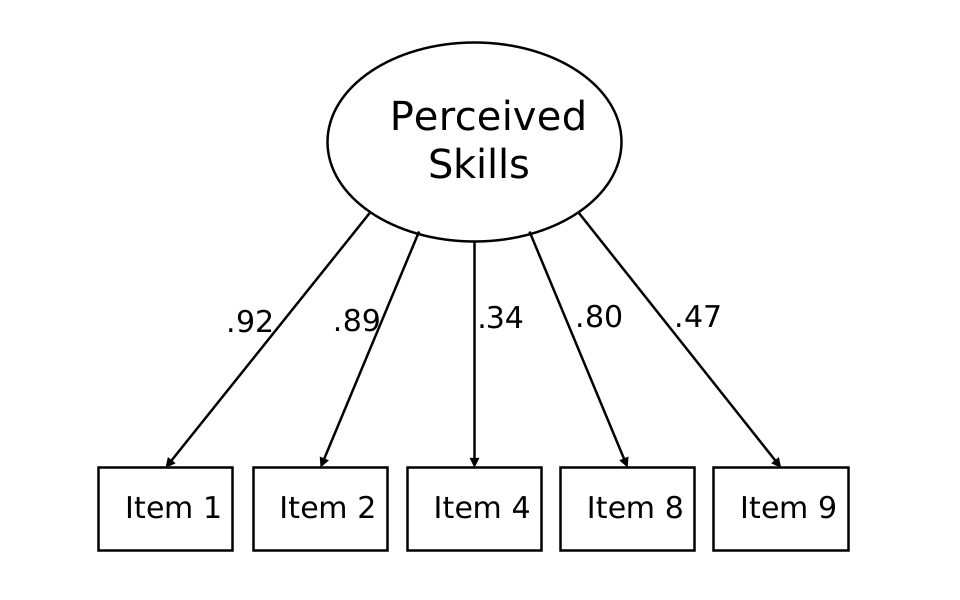
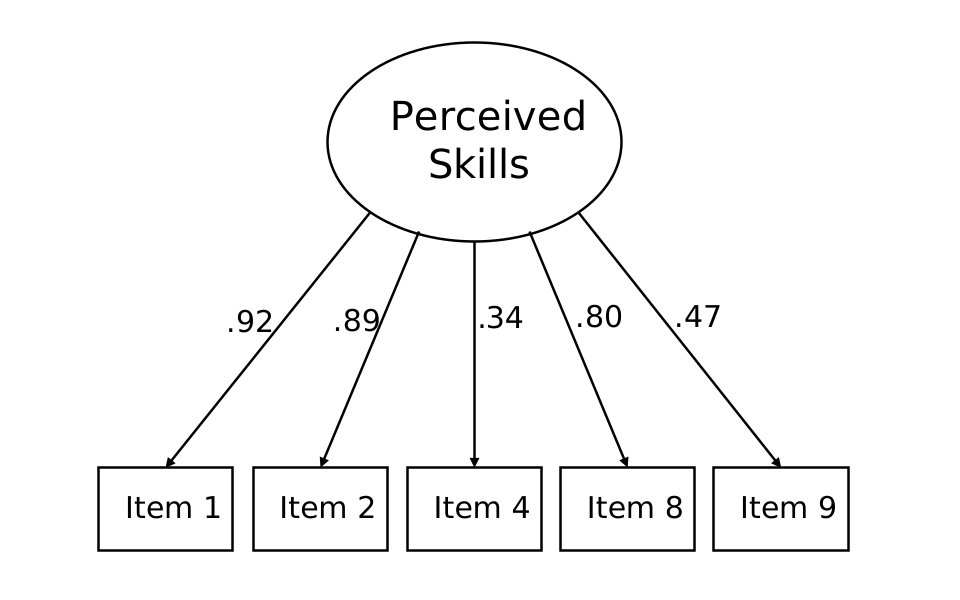
With all items included, an initial CFA model of the 10-item measure did not show good model fit with a one-factor structure (CFI = .70) and failed to achieve convergence with the hypothesized two-factor structure. Though items 3 and 5 had the strongest loadings on the Orientation Alignment factor in the EFA, no 2-factor CFA model including these items was able to achieve convergence. Based on the review of pairwise correlations showing small or negative associations between the reverse scored items and the rest of the measure, items 3 and 5 were removed and additional CFA models were run based on a one-factor model. With 8 items, the one-factor model achieved convergence but did not exhibit good fit (CFI = .78) with items 6 and 7 both showing standardized factor loadings below .20. These items were then removed for a 6-item model retaining only the items that had originally loaded onto the Perceived Skills factor in the EFA. This model showed improved but not acceptable fit (CFI = .85) with item 10 identified as having the lowest standardized factor loading of .28. With item 10 removed, the 5-item model showed acceptable model fit with a nonsignificant chi-square value (χ2[5, N = 176] = 10.51, p = .062; CFI = .986; TLI = .973; RMSEA = .079, 90% CI [.000, .147], SRMR = .049) and fit indices meeting cutoffs for good fit for the CFI, TLI, and SRMR and the RMSEA falling in the range of acceptable fit (<.08) rather than close fit (Steiger, 1990). Table 4 shows the fit statistics for each assessed model that achieved convergence during the CFA. In the one-factor 5-item model (see Figure 1), items 1, 2, 4, 8, and 9 loaded onto the hypothesized latent variable of perceived skills with standardized factor loadings of at least .34 and all model paths statistically significant at an α of .05. Thus, the 5-item measure was retained as a Solution-Focused Perceived Skills Measure (SFPS) with all conceptualized orientation alignment items removed during the CFA. Variables were created in the dataset based on the 5-item SFPS Measure which proceeded to reliability and validity assessment of the final measure.
Reliability
Across the first 3 administrations, the 5-item SFPS Measure showed good internal consistency with a Cronbach’s α of .82 at the pre-training survey, .87 at the post-training survey, and .88 at follow-up. Across the first 3 administrations of the measure over the course of the implementation period, the SFPS Measure showed moderate test-retest reliability with an intraclass correlation coefficient (ICC) of .63.
Validity
Table 5 shows the assessment of construct and criterion validity of the SFPS Measure against other measures included in the provider surveys of the program evaluation. The SFPS Measure showed some evidence of convergent validity with measures of intervention acceptability, feasibility, and appropriateness with a moderate (r = .33; p < .001) correlation with the FIM and small correlations (r = .25-27; p < .001) with the AIM and IAM. The SFPS Measure also exhibited convergent validity with the SFBT Fidelity Instrument with a moderate positive correlation (r = .51, p < .001) with SFBT fidelity. Criterion validity was assessed by comparing the SFPS Measure with a provider’s self-reported adoption of SFBT as well as the CSAT outcomes subscale at 4-month follow-up. There was evidence of concurrent validity between the SFPS Measure and the rate of SFBT adoption measured at the same point in time with a moderate correlation between the SFPS Measure and SFBT adoption (r = .54, p < .001). The SFPS Measure also showed some evidence of predictive validity with a small significant correlation with perceived SFBT outcomes on the CSAT subscale measured 4 months later (r = .19, p = .031).
Discussion
The present study describes the development and pilot psychometric evaluation of the SFPS Measure, a brief self-report measure reflecting a provider’s perceived competence in SFBT skills. The final measure (see Appendix A) consists of 5 items with acceptable fit for a one-factor model of perceived SFBT skills. In the initial evaluation conducted as part of a non-research program evaluation of an SFBT implementation initiative, the SFPS Measure has shown evidence of strong internal consistency and moderate test-retest reliability. The pilot psychometric evaluation showed some evidence of construct and criterion validity with small to moderate correlations with a variety of related measures and indicators. Notably, the SFPS Measure showed small to moderate convergent validity with the most established measure of SFBT Fidelity (Lehmann & Patton, 2011) in a brief self-report format that is meaningful even without prior training in SFBT. For its potential use as an outcome measure in implementation research on SFBT, the SFPS Measure also showed small to moderate correlations with measures of acceptability, feasibility, appropriateness of an intervention (Weiner et al., 2017) and perceived outcomes (Malone et al., 2021) that may support adoption and sustainability of SFBT in actual practice settings (Proctor et al., 2011; Proctor & Rosen, 2008). In fact, the SFPS Measure did show a moderate correlation with providers’ self-report of adoption of SFBT and a small correlation with ratings on the CSAT outcomes and effectiveness subscale four months later. Based on the reliability and validity assessment in the pilot psychometric evaluation, the SFPS Measure shows promise as a self-report instrument of providers’ perceived competence in SFBT with potential applications for SFBT training and implementation research, with further testing and validation of the SFPS Measure warranted using a larger sample of providers from a variety of practice settings.
Potential Applications
The SFPS Measure offers a short and straightforward option for current or prospective providers of SFBT to rate themselves on items related to perceived SFBT skills. By focusing on providers’ perceived competence rather than session-level fidelity, the SFPS Measure shows promise as a meaningful addition to existing measures with potential applications for SFBT training, implementation, and research.
SFBT Training
With SFBT now supported by a global base of effectiveness research (Neipp & Beyebach, 2024; Vermeulen-Oskam et al., 2024), there is also a global need for effective training in solution-focused practices. The International Alliance of Solution Focused Teaching Institutes (IASTI) has established common standards for training and certification of solution-focused practitioners, with 27 member institutions across Europe, Asia, and the Americas by 2026 (IASTI, n. d.). The standardization of training expectations through IASTI represents an important step for the recognition of SFBT as an evidence-based practice, but formal measurement of the outcomes of SFBT training offers another avenue for assessing and ensuring the quality of training. However, most solution-focused measures target either client-level outcomes or fidelity within a specific session, and session-based fidelity does not offer a meaningful baseline measure for assessing changes due to SFBT training through pre-post measurement if a clinician is not currently conducting SFBT sessions. To fill this gap, the SFPS Measure might serve as a convenient self-report measure for SFBT training providers to use with trainees to assess the impact of their training. Importantly, the SFPS items are meaningful even if a clinician has no prior knowledge or experience with SFBT, so it could serve as a baseline measure to help detect changes in a provider’s perceived competence to deliver SFBT before and after receiving training.
SFBT Implementation and Research
Once an intervention has established evidence of its effectiveness, attention shifts to promoting implementation of the intervention in real-world practice settings (Proctor & Rosen, 2008). The SFPS Measure items were originally designed to assist assessment of a non-research program evaluation of an SFBT implementation initiative (Eads et al., 2025) and it has potential applications for use by agencies seeking to implement SFBT in their organization. First, the SFPS Measure might be used to assess the outcomes of implementation supports through pre-post measurement of SFPS scores before and after a provider has received the implementation support. As with training, the SFPS Measure could provide a baseline measure of a provider’s perceived competence in SFBT before implementation even if they have no prior knowledge or training in the approach. Second, the potential use of the SFPS Measure to assess outcomes of implementation supports could help compare the effectiveness of different implementation strategies as part of program evaluation or possibly SFBT implementation research. Notably, this study showed some evidence of correlation between the SFPS Measure and adoption of SFBT as well as intervention outcomes on a sustainability measure, so the SFPS Measure may have applicability for implementation studies to assess changes in providers’ self-perceived competence in SFBT that may be related to adoption and sustainability of SFBT in an implementation initiative.
Limitations
There are important limitations of this study which should be noted. First, the development and data collection for the assessment of the proposed items took place as part of a non-research program evaluation of an implementation initiative in integrated care settings, which limits the generalizability of the findings for use in other contexts. Notably, the needs of the program evaluation to measure outcomes from training and implementation supports resulted in a data collection schedule where provider surveys were conducted before and two weeks after the SFBT training and after four months of implementation support. Thus, each repeat measurement using the SFPS items took place after the introduction of training or consultation that likely influenced providers’ capacity to practice SFBT, so there was no opportunity for pure measurement of test-retest reliability in the absence of potentially confounding factors. This may have influenced the findings regarding test-retest reliability and warrants follow-up research testing the short-term stability of the SFPS Measure before training is introduced.
The self-report nature of the measure and the focus on perceived SFBT competence also introduce limitations. While a self-report measure of perceived competence offers convenience and the ability to establish a pre-training baseline (Ruzafa-Martinez et al., 2013), self-perceived competence may not mean that a provider has actual observable competence in the intervention as providers often overestimate their capacity to use evidence-based practices (Hogue et al., 2015; Lai & Teng, 2011). Further testing of the SFPS Measure should assess its concurrent validity with observed SFBT skills to assess the association between the self-report of perceived skills and actual competence rated by an expert observer. A self-report measure of perceived competence is also subject to response bias (Engel & Schutt, 2017). In the context of the program evaluation of the SFBT training and implementation initiative, providers may have felt implicit pressure to give more favorable ratings to measures related to their skills in SFBT to justify the funding their agency had received for their participation. Additionally, the use of financial incentives to encourage survey completion could potentially add to this implicit pressure. Acquiescence bias in which participants may be more likely to agree with statements than disagree could account for the poor performance of reverse coded items (Engel & Schutt, 2017) which may have contributed to the failure to operationalize the hypothesized Orientation Alignment domain in the final measure. Future measure development and testing should consider avoiding reverse-coded items when revisiting the attempt to operationalize a brief self-report measure of a provider’s alignment with a solution-focused orientation.
Finally, there were limitations regarding the assessment of the reliability and validity of the SFPS Measure. Though the final CFA model exhibited good fit on several indices as well as a nonsignificant chi-square value, the RMSEA near .08 and the factor loading of item 4 of .34 diverged from a close-fitting model with strong factorial validity and should be considered acceptable rather than good fit in the evaluation of the measure (Steiger, 1990). The sample size under 200 also weakened the statistical power of the CFA (Kline, 2011), which may have impacted the evaluation of the fit of the CFA models. For assessment of validity, there were only small to moderate correlations with other self-report measures of acceptability, feasibility, and appropriateness (Weiner et al., 2017), and there was not convergent validity testing against other established measures such as the SBI or SFI that were not included in the program evaluation surveys (Grant, 2011; S. Smock et al., 2010). The assessment of concurrent validity with SFBT adoption based on a single self-report item also introduces potential response bias, memory effects, or poor prior understanding of SFBT that may have resulted in inaccurate estimation of the level of SFBT adoption at the pre-training survey (Engel & Schutt, 2017). Given these limitations, the findings should be interpreted with caution and future research is needed to further validate the SFPS Measure using a larger and broader sample not limited to integrated care settings.
Conclusion
This study reports on the development and pilot psychometric evaluation of the SFPS Measure, a 5-item self-report measure of a clinician’s self-perceived competence in SFBT. The total score offers insight into a provider’s perceived skills in SFBT and offers potential applications for assessing SFBT training and implementation. In the pilot psychometric evaluation, the measure showed acceptable model fit for a one-factor structure of perceived skills with good internal consistency of the final measure. The SFPS Measure also shows moderate test-retest reliability and some evidence of validity in comparison to measures of SFBT fidelity and a provider’s self-reported adoption of SFBT. The SFPS Measure shows promise as a potential tool for SFBT implementation research and should be subjected to further psychometric testing in additional contexts using a larger sample.
Acknowledgments
The author would like to acknowledge Rose Boccio for reviewing and giving input on the proposed items.
Funding
The measure development and data collection took place as part of an implementation initiative program evaluation conducted by the Illinois Behavioral Health Workforce Center (BHWC), which is funded by the Illinois Department of Human Services’ Division of Mental Health (CSFA Number: 444-22-2844). The funders had no role in study design, data collection and analysis, decision to publish, or preparation of the manuscript.
Disclosure Statement
The author is the developer of the SFPS measure and was a consultant with BHWC at the time of the program evaluation.
Artificial Intelligence
The author declares that no Generative AI was used to create the text and figures in full or partially.