Bolivia is a country characterized by its diverse cultural nuances that encompass valleys, plains, and highlands. It is within this varied topography that unique lifestyles converge, giving rise to a rich and diverse identity and culture (Mesa Gisbert, 2013). However, due to the multitude of regions and cultures, achieving a harmonious integration of these diverse cultural elements can be challenging. One promising avenue to foster this harmonization is through the lens of language. By exploring language as a unifying force, it becomes possible to bridge cultural divides and create a meaningful cohesion within Bolivian society.
General Objective
Evaluate the physiological response (heart rate and oxygenation level) of indigenous participants in the Bolivian Altiplano during the application of solution-focused interviews versus problem-focused interviews, within the context of violence prevention.
Specific Objectives
-
Measure the differences in heart rate and oxygenation levels between participants asked problem-focused questions and those asked solution-focused questions.
-
Establish the potential association between the interview type (solution-focused vs. problem-focused) and indicators of greater physiological well-being (lower heart rate and higher oxygenation).
-
Describe the interview process itself (including linguistic and physiological parameters) as a foundational step, while identifying the limitations of the current methodology and suggesting areas for broader future research (e.g., age differences).
The Value of Language in Addressing Violence
Humanity’s reality is intricately woven through the very language we employ. In our conversations, language serves as a dynamic and diverse tool that enables us to co-create new realities (Wittgenstein, 1967). As a result, through meaningful and transformative conversations, reality itself can undergo change and influence how individuals engage with their surroundings (Froerer & Walker, 2022). By recognizing the pervasive nature of language in our everyday micro-conversations, which collectively shape the fabric of culture (Moon, 2022), one can truly grasp the profound tapestry of Bolivian culture. Within this context, language emerges as a powerful instrument for catalyzing change, fostering integration, and nurturing respect. Language can offer a promising avenue to tackle pressing concerns in Bolivian society in a meaningful way, including pervasive concerns such as violence.
The Pan American Health Organization and the World Health Organization define violence as,
“the intentional use of force or physical power, in fact or as a threat, against oneself, another person or a group or community, that causes or has a high probability of causing injury, death, psychological damage, developmental disorders or deprivation” (WHO, 2002, p. 5).
As stated by Bismark Pinto (2016), violence is the act of compelling another person to conform to one’s desires, making it the antithesis of love. Love, on the other hand, entails embracing the other person as they are, and coexisting in love involves validating and fulfilling oneself by witnessing the growth and development of the other person (Maturana Romesín, 2010).
Moreno et al. (2021) sheds light on the intricate nature of violence, particularly among indigenous women, within Bolivia and other similar cultures, and how violence permeates many aspects of life for these women. By considering the intersectionality and social location of these indigenous women, we can further understand how violence may uniquely impact them (Cabnal, 2019). It is likely that much of the research available about domestic violence, and its treatment, may be ill-suited to the unique needs of indigenous women. These treatments, which focus heavily on psychoeducation and legal involvement, may serve only to perpetuate the colonizing approach of top-down intervention, without seeking to understand what adaptations to treatment might be appropriate within indigenous communities.
A report by the United Nations Program for the Prevention of Violence against Children and Women in 2021 reveals that in Bolivia a distressing 7.5 out of every 10 women experience some form of violence throughout their lifetime, with an average of over 100 women being murdered each year solely due to their gender. Swissinfo.ch (2022). discloses a disheartening figure of 33,453 cases of violence against women and minors reported between January and August in Bolivia, representing an 11% increase compared to the same period in 2021.
Between 2013 and 2023, Bolivia witnessed a staggering 193% increase in cases of domestic violence, reflecting the growing severity of this societal issue. In 2023 alone, the country recorded 81 cases of femicide, a harrowing statistic that underscores the deadly consequences of gender-based violence. Additionally, there were 39,096 reports of domestic or family violence during the same year, signaling an alarming rise in the number of individuals, particularly women and children, subjected to abuse within their own homes. These figures, reported by the Coordinadora de la Mujer in 2024, highlight the urgent need for comprehensive strategies to combat and prevent violence at all levels of society.
In the Bolivian context, the Universidad Mayor de San Andrés (UMSA) is dedicated to enhancing the reach and effectiveness of the Comprehensive Legal Services (SLIM) situated in rural regions. These services play a vital role in assisting indigenous communities residing in the altiplano area of the La Paz department, and act as crucial entities in combating violence. To further this mission, the SLIM-UMSA program was established, undertaking research aimed at shedding light on the power of language as a catalyst for transforming realities and preventing violence. Through this initiative, and collaborative work with indigenous communities, valuable insights are being generated, contributing to a deeper understanding of how language can drive positive change.
Bolivia is a nation characterized by a vibrant sense of community, with the indigenous population playing a pivotal role in preserving significant customs and practices crucial for their sustenance. Embracing a stance of cultural humility (Foronda et al., 2015), this article endeavors to address the urgent need to prevent violence while emphasizing deep respect for diverse ways of life. In doing so, we aim to shed light on and convey the intricate dynamics of language and conversations focused on violence prevention, while preserving indigenous culture.
Barriers to Adequate Domestic Violence Prevention
Traditionally, conversations surrounding violence prevention have often adopted a language centered around the problem, providing psychoeducation on its definition, causes, and the various types violence. This approach has typically stemmed from a punitive and legalistic standpoint. However, when it comes to minorities, socially disadvantaged individuals, and indigenous communities, such an approach creates a dynamic where an expert figure (such as a public official, university representative, or activist) assumes the role of teaching, implying a lack of necessary resources on the part of the individuals to confront violence themselves.
The dedicated personnel responsible for providing care within SLIM face significant challenges due to inadequate working conditions, marked by high legal risks and job instability (Pérez Lamadrid & Froerer, 2022). Employment contracts, which can arbitrarily span one, three, six, or nine months, are designed in such a manner to avoid the payment of bonuses or provision of health insurance. Moreover, specialized training, crucial for their roles, proves to be prohibitively expensive when compared to the national minimum wage. Therefore, the service providers charged with addressing violence, and other issues, within these indigenous communities are themselves subject to hostile working conditions, which may further decrease the effectiveness of current domestic violence preventions.
Solution-focused interviews could be a flexible and practical alternative, as they propose a symmetrical relationship, working with people’s language in their own cultural context, honoring their desired outcome, asking them to describe its presence in their lives, whether present, past, or future, and highlighting their resources. In the case of violence prevention, the solution-focused approach focuses on working toward what is desired rather than away from what is unwanted. Additionally, the versatility of solution-focused interviews focuses on a continuum in people’s lives, but with greater possibilities and agency.
SLIM workers are provided with manuals that serve as a means to disseminate information among the population, presenting a potential strategy to enhance service delivery despite the aforementioned challenges. However, this replication process often follows a linear approach, overlooking the crucial interaction and sociocultural factors unique to each community or to each individual they encounter. The participation of indigenous community members within these interactions is limited to being simply recipients of information or intervention; this approach neglects the opportunity for meaningful engagement. While the professional may be knowledgeable about the content being delivered, they often lack the awareness or care to truly understand the dynamics and nuances unfolding between themselves and the community members they serve.
The implementation of manualized practices for violence prevention often lacks the space for critical reflection on the creative process during conversations. The participation of community members remains minimal, while the professional assumes the roles of an expert and a heroic leader (McKergow, 2009). As experts, the professional possesses the knowledge outlined in the manual, prescribing how a community should prevent violence. They also assume the role of a hero leader, making decisions and dictating what needs to be done, often with an implicit expectation that community members are obliged to comply. In the solution-focused approach, however, the protagonist of the interview is the client, who describes the presence of his or her desired transformation, which contains his or her own descriptions of the context in which the client lives, incorporating his or her own notions of well-being, in a respectful manner and generating a relationship in which the client is able to respond with agency to the interviewer’s questions.
While these efforts to disseminate important information are commendable, it is crucial to recognize that they can unintentionally contribute to a neo-colonization. These processes often involve denying community resources and assuming that individuals are incapable of managing their own transformative journeys. Paradoxically, empowering a community, particularly in the context of violence prevention, necessitates fostering daily coexistence and recognizing the inherent capability within the community to drive meaningful change.
Using Solution Focused Language to Overcome the Barriers
From Humberto Maturana’s perspective, love involves recognizing the other as a legitimate being in coexistence, without imposing one’s own expectations or demands (Maturana Romesín & Porksen, 2015). For Maturana, transformation occurs through everyday language; when language legitimizes the other’s process of becoming, change becomes possible (Maturana Romesín, 2010). Within the solution-focused approach, individuals articulate their own language of transformation—their desired outcome—and the therapist legitimizes and expands this language through questions that invite further development of change.
This research initiative emerges from a critical stance that prioritizes language as the primary vehicle for solutions. Its central aim is to create a space in which individuals can articulate and cultivate their own understanding of well-being. The project is grounded in deep respect for cultural diversity, positioning the interviewed person as the expert in their own life. The relationship between interviewer and interviewee is collaborative: the interviewer asks generative, thought-provoking questions that expand solution-, hope-, and love-oriented language.
Solution-Focused Brief Therapy (SFBT) developed as a therapeutic model grounded in useful, respectful, and co-constructed language. It has been applied to issues such as domestic violence (Dinmohammadi et al., 2021; Lee et al., 2004), among others presenting concerns. However, its formal application with Indigenous populations has not been extensively examined. Over time, the evolution of the solution-focused approach has placed increasing emphasis on the linguistic processes that generate change, particularly through presuppositional questioning (Froerer et al., 2022). These questions assume that individuals and communities already possess resources and capacities that can be mobilized toward their preferred outcomes.
More recently, Elliott Connie and Adam Froerer (2023) articulated a structured framework known as the Diamond Approach to SFBT. This approach outlines three stages of a solution-focused conversation. The first stage centers on establishing the client’s desired outcome—that is, the change they would like to achieve as a result of the conversation. This client-defined outcome determines what is relevant for discussion and what remains outside the scope of the session. The clinician’s questions are guided exclusively by this desired outcome.
The second stage invites a detailed description of how life would be different if the desired outcome were present. This description unfolds through three possible avenues: 1) the History of the Outcome (times in the past when aspects of the desired outcome were already present), 2) the Resources for the Outcome (existing skills and qualities that support the possibility of change), and 3) the Future of the Outcome (a hypothetical future in which the desired outcome is realized and its effects are visible).
The third stage focuses on closure. The session concludes in a manner that respects the client’s autonomy and affirms their expertise. The work is understood to have been accomplished within the conversation itself; no advice or homework is assigned. In this evolved understanding of SFBT, the descriptive process constitutes the intervention. The emphasis shifts away from praise, reframing, or task-setting and toward engaging clients in meaningful dialogue that foregrounds their own agency.
This approach keeps the client’s desire at the center of the conversation rather than privileging the therapist’s expertise. It prioritizes language and the co-construction of reality over psychoeducation or skill-based interventions. In doing so, it avoids imposing externally defined solutions and instead invites clients to identify the skills and characteristics they already possess—resources that can support outcomes aligned with their cultural context and lived experience.
Need for the Current Study
To compare the two conversational processes—solution-focused and problem-focused—oximeters were used as measurement devices. These instruments monitor an individual’s oxygen saturation and heart rate. The devices were placed on participants’ index fingers, allowing real-time physiological data to be observed throughout the conversation. In addition, a mobile phone video recorder was used to capture both the fluctuations displayed on the oximeter screen and the audio of the interaction. This combined method created a comprehensive record of both the physiological responses and the verbal dynamics of the conversations.
Potential differences between the two types of conversations can be interpreted through Lang’s bioinformational theory (1979). According to this framework, when the brain vividly imagines a situation, it tends to process it as though it were happening in the present, which can intensify emotional responses. These reactions may be positive or negative, depending on the nature of the conversation and the meanings participants attach to it.
From this perspective, experiences of positive emotion broaden an individual’s perception of their environment, allowing them to notice additional possibilities and opportunities. This expanded awareness can stimulate the development of new ways of responding to challenges. Over time, individuals begin to generate what Barbara Fredrickson (2012) calls “action ideas”—emerging possibilities for behavior that foster creativity, hope, and confidence.
SFBT is proposed as an evidence-based (Kim et al., 2019) mechanism of change that uses language to co-construct the transformation desired by the client, with a strong emphasis on the generation of hope (Connie & Froerer, 2023; De Shazer et al., 2007; O’Hanlon & Weiner-Davis, 2003). By orienting conversations toward well-being and future possibilities, this linguistic process can evoke positive emotions, whose beneficial effects on the brain are both observable and measurable (Alexander et al., 2021; Fredrickson & Joiner, 2002).
From a neuroscience perspective, the detailed description of desired change may strongly engage neuroplastic processes (Chaplo & Fishbein, 2021; Kaczmarek, 2020; Madu, 2019). This engagement has been associated with progressive increases in oxyhemoglobin (oxy-Hb) levels in the dorsolateral prefrontal cortex (DLPFC), a region essential for cognitive control and emotional regulation (Miller & Cohen, 2001; Schmaußer et al., 2024). Activity in this cortical area is also connected to the vagus nerve, a key bidirectional pathway between the brain and the heart (Thayer et al., 2012; Thayer & Lane, 2009). Through these pathways—originating in part in the prefrontal cortex—the nervous system can contribute to the slowing of heart rate.
Consequently, conversations centered on a desired state of well-being may be associated with physiological indicators of improved regulation, such as slightly lower heart rates and increased oxygenation. Research suggests that these responses can accumulate over the course of a session, reflecting the reinforcing effects of sustained positive reflection (Froerer & Jordan, 2013; Kort et al., 2021). These physiological changes would add to other physiological studies that support the effectiveness of SFBT (Koorankot et al., 2022).
Oxygenation and heart rate readings were collected from both the solution-focused and problem-focused groups and compared with one another. The aim of this study is to determine whether there are significant psychophysiological differences between solution-focused interviews and psychoeducational (problem-focused) interviews among members of Indigenous communities in Bolivia.
METHOD
Methodology
This study follows a quantitative approach that uses a quasi-experimental design in which two types of interventions are examined: problem-focused interviews and solution-focused interviews. This study is descriptive and exploratory because it aims to characterize oxygenation and heart rate during these intervention processes (Hernández et al., 2016).
Participants
The participants in this study were recruited through a convenience sampling method, with individuals self-referring to take part in the research. Participants were not screened for mental health disorders and were therefore considered a non-clinical sample. The study was conducted as part of a broader community outreach project that involved professionals from several disciplines working with rural populations. All interviews took place during scheduled visits to the Altiplano region of La Paz, Bolivia. All participants and researchers were native Spanish speakers. All interviews were conducted in Spanish.
The study utilized a sample of nineteen (N=19) participants. The sample demonstrated a near-even split in terms of gender, with female respondents slightly dominating the cohort at 52.63% (n=10) and male respondents accounting for 47.37% (n=9). The age distribution was balanced across the three defined groups: 31.58% (n=6) were in the 17–25 and 26–45 age groups, respectively, while the 46–67 age group was the largest segment, representing 36.84% (n=7) of the sample. Regarding geographic origin, the participants were distributed across four municipalities. Municipality 4 held the highest proportion of respondents, with 36.84% (n=7), followed by Municipalities 1, 2, and 3, each contributing an equal share of 21.05% (n=4).
A total of 19 individuals participated in the study. Of these, 12 were assigned to the solution-focused interview group and 7 to the problem-focused interview group. Participants ranged in age from 17 to 67 years. They came from the following communities: Laja (8), Tiahuanaco (3), Achocalla (5), and Viacha (3). Seven participants were men and twelve were women. To allow both between-group and within-group comparisons, one group participated in solution-focused interviews, while the other group took part in problem-focused interviews. Group assignment was randomly assigned by the flip of a coin. Participants were informed that they could discontinue participation in the study at any point for any reason. Given the sensitive nature of the interview content, participants were informed that psychological assistance was available if needed. The primary researcher for this study was a trained psychologist and could have provided this follow up care. No participants discontinued participation or expressed a need for psychological care.
The interviewers were both masters-degree level clinicians. The SF interviewer is an international trainer of SF and brought his expertise of SF to these interviews. He is a certified diamond approach clinician. The problem-focused interviewer has extensive background in trauma intervention.
Instruments
Solution Focused Interview Question Guide: Solution-focused interviews were semi-structured based on the SFBT Diamond Approach, divided into three parts: 1) find out the client’s desired outcome from the conversation, 2) A detailed description about the presences of the client’s desired outcome, and 3) closing, in which the session ends with the least possible intervention from the interviewer.
Problem Focused Interview Question Guide: The problem-focused interview was a psychoeducational process in which the definition of violence and its causes were first explained, then the legal framework against violence and how to resort to the relevant authorities in cases of violence were explained, and finally how to receive help from the care systems.
Pulse Oximeters: Fingertip pulse oximeters were utilized. They were DC3V powered and used two-AAA batteries. The SpO2 ranged from 70-100% and measured 25-250 beats per minute.
Video recorder: The camera of a Samsung Galaxy M33 5G cell phone was used.
Procedure
The procedure consisted of three phases, which were 1) logistics and coordination of the research process, 2) data collection, and 3) analysis. In the first phase, support and permission were requested from the community members of the visited areas and the oximeters were purchased. The interviewers and the interviewees were all native Spanish speakers. No translation was necessary. For this reason, no mention of translation was added to the paper.
In the data collection phase, an informed consent was signed and participants were summoned to the main squares and fairs of the communities. It was here they were visited with the backing of the University and as part of the intervention and support project of the Culture of Peace Observatory. Each participant engaged in one 15-minute interview, regardless of interview type (SF or problem-focused). The interview/data collection period comprising a total of 15 minutes: two minutes for baseline establishment, nine minutes for pulse oximeter and heart rate data collection, and three minutes for predictive analysis to assess interview trends. The interviews were carried out by two researchers, one for the solution-focused interviews and the other for the problem-focused interviews for the community members. This was decided because they are experts in the type of interview. The interviewers reviewed the protocol with the participants. These interviews were videotaped and a second assistant took notes of the oxygen level and heart rate. Fifteen minute interviews were chosen because this project was part of a larger community-based project and participants had other components of the project to complete that were outside the parameters of paper. It should be noted that these were interviews and not therapy sessions, and interpretation of the results should be considered with this in mind. The analysis of the data was carried out with an IBM SPSS statistical program and the results found were reviewed by the researchers.
Data analysis.
The analysis of the data started by completing descriptive statistics of problem focused and solution focused interviews. Next, comparisons of the two groups were investigated on oxygenation level per minute and heart rate per minute across the duration of each interview. Finally, statistical predictions of oxygenation and heart rate, based on trends, were explored for both problem-focused and solution-focused interviews, based on data obtained linearly in a time of nine minutes and adjusted data. All analyses were completed using IBM SPSS Statistics 27.0.1.
RESULTS
Given the characteristics of the sample and the participants in the study, it was decided to use non-parametric tests for the analysis of the data, both for the comparison of oxygenation and heart rate per minute or for the complete time.
Descriptive Statistics
First, the researchers analyzed the problem-focused interviews then the solution-focused interviews. Table 4 indicates the overall levels of oxygenation (OX) and the overall heart rate (HR) results for all problem-focused interviews for the first nine minutes. It is important to note that oxidation readings officially began at minute two, after a baseline was established for each participant. It is observed that the oxygenation from the mean and the maximum score obtained is rising with a value of one. While the heart rate from the maximum and average scores shows to be falling. This dynamic is more evident in the minimum scores obtained by the participants.
For the solution-focused interview group, the results are included in Table 5. Again, the overall oxidation (OX) rates and the overall Heart Rate (HR) results for the first nine minutes are reported. The level of oxygenation for the solution focused goes up over time, with a maximum value of 92 and a maximum value of 113. The average oxidation for this group shows a similar trend with a minimum value of 87.5 and a maximum value of 91.75. The heart rate data, on the other hand, shows an irregular dynamic, but it has a tendency to go down over time. With a maximum rate at minute two being 102 and a maximum rate at minute nine of only 93. The average heart rate also decreased a little bit over time with a beginning rate of 85.67 and a concussing rate of 81.92.
Time Comparisons
To differentiate exact moments of the solution-focused interviews and the problem-focused interviews where there is a significant change, a comparison of oxygenation and heart rate per minute was made. Table 6 suggests that in the problem-focused interviews there was a significant change (p < .05) between minute five and minute six of the interviews in oxygenation (indicated in bold on Table 6). Whereas in the solution-focused interviews there was a change in oxidation level between minute seven and minute eight, that was approaching statistical significance (p < .05; again, indicated on Table 6 in bold).
To jointly analyze the nine minutes of oxygenation measurements taken during the interview, the Friedman test was used. Table 6 reflects in the first row the times between minutes with the following abbreviation OX - OX, which divides the interview into periods of one minute duration. This is interpreted by means of two significance level statistics (p) and the Z coefficient. The significance level is relevant when it is p < .05, so attention should be paid to that minute.
The results from the Friedman test for the problem focused group were F = 5.666(7), with a significance value of p = .579. While the results for the solution focused group were, F = 7.563 (7), p = .373. These results suggest that during the nine minutes, regardless of interview group (problem-focused or solution-focused) there was no significant change, but that does not mean no change exists because we can see a little change in detail on Table 6.
Table 7 indicates the heart rates for both problem-focused and solution-focused interviews, with a minute-by-minute analysis. The first row of Table 7 details the times between minutes with the following abbreviation HR - HR. This is interpreted by means of two statistics that are the level of significance (p) and the coefficient Z, the level of significance when it is p < 0.05 turns out to be a significant period of time .These results indicated that within the problem-focused group there was a significant change (Z = .042, p < .05) between minute six and minute seven (indicated in bold on Table 7). In contrast, within the solution-focused group there is a change between minute eight and minute nine that is close to approaching statistical significance (Z = .065, p > .05; again, indicated in bold on Table 6). This means that we can find differences in time between some minutes in the heat rate and these are significant if we include all the cases in the study.
The Friedman test to compare the change between the two groups during the nine minutes of interview was used again. It was discovered that the heart rate of the problem-focused group did change, but not in a statistically significant way, although it was approaching significance (F = 13.554(7), p = .06). On the contrary, the solution-focused group did not show a statistically significant change (F = 6.032(7), p = .536).
Predictions
For an in-depth analysis, predictions of oxygenation and heart rate in both solution-focused and problem-focused interviews were investigated. Here, the behavior of oxygenation and heart rate, the trend and the initial three minutes after the interview are different. These analyses helped to differentiate what could happen if these interviews were longer. A time of three minutes was predicted because it is an acceptable range of prediction based on the baseline time taken into account for the interviews, which were three minutes, resulting in 12 minutes of analysis in total. The analysis focuses on the initial minutes because physiological responses to psychological stimuli, like stress or rapport, are typically strongest and most observable during the onset of the interaction.
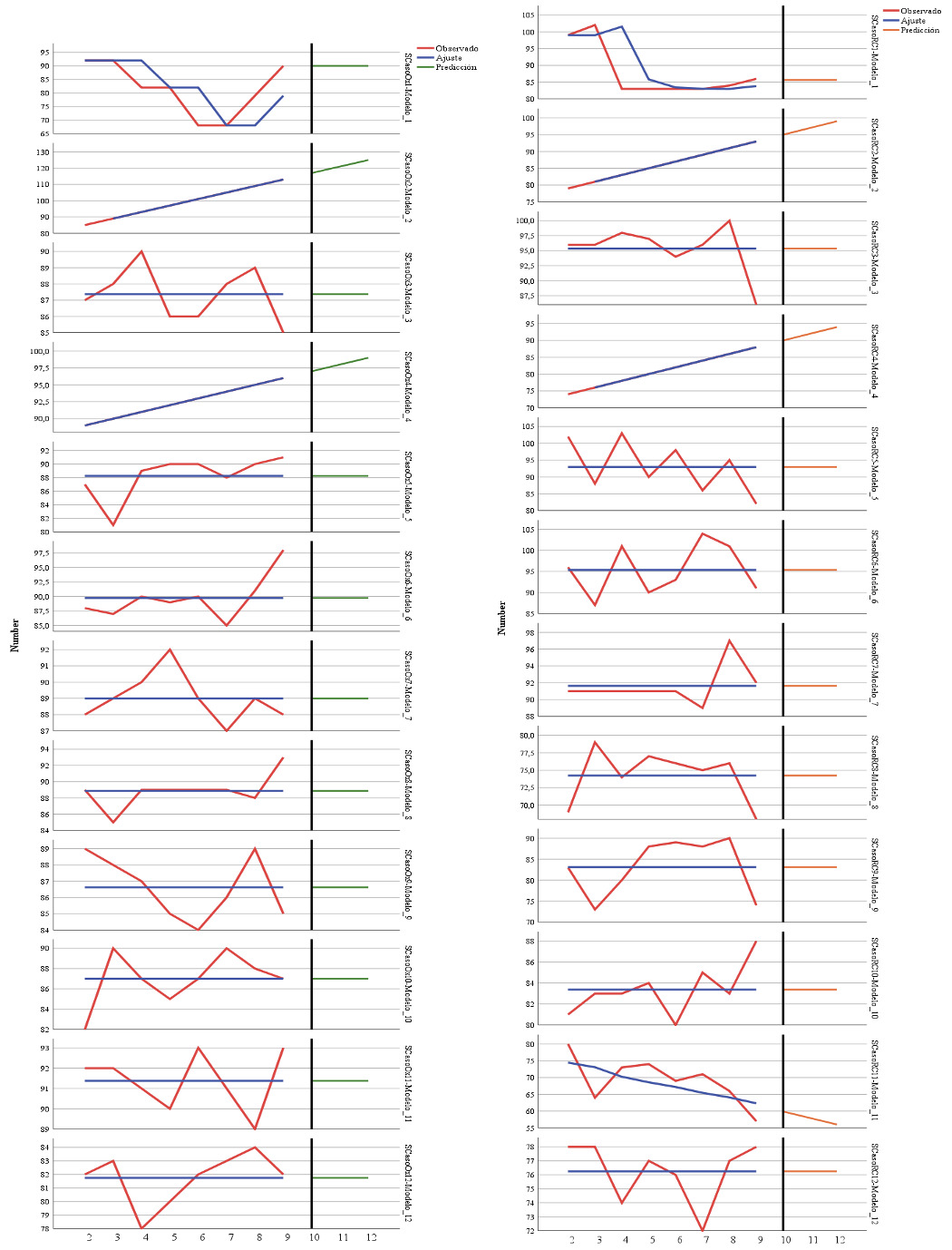
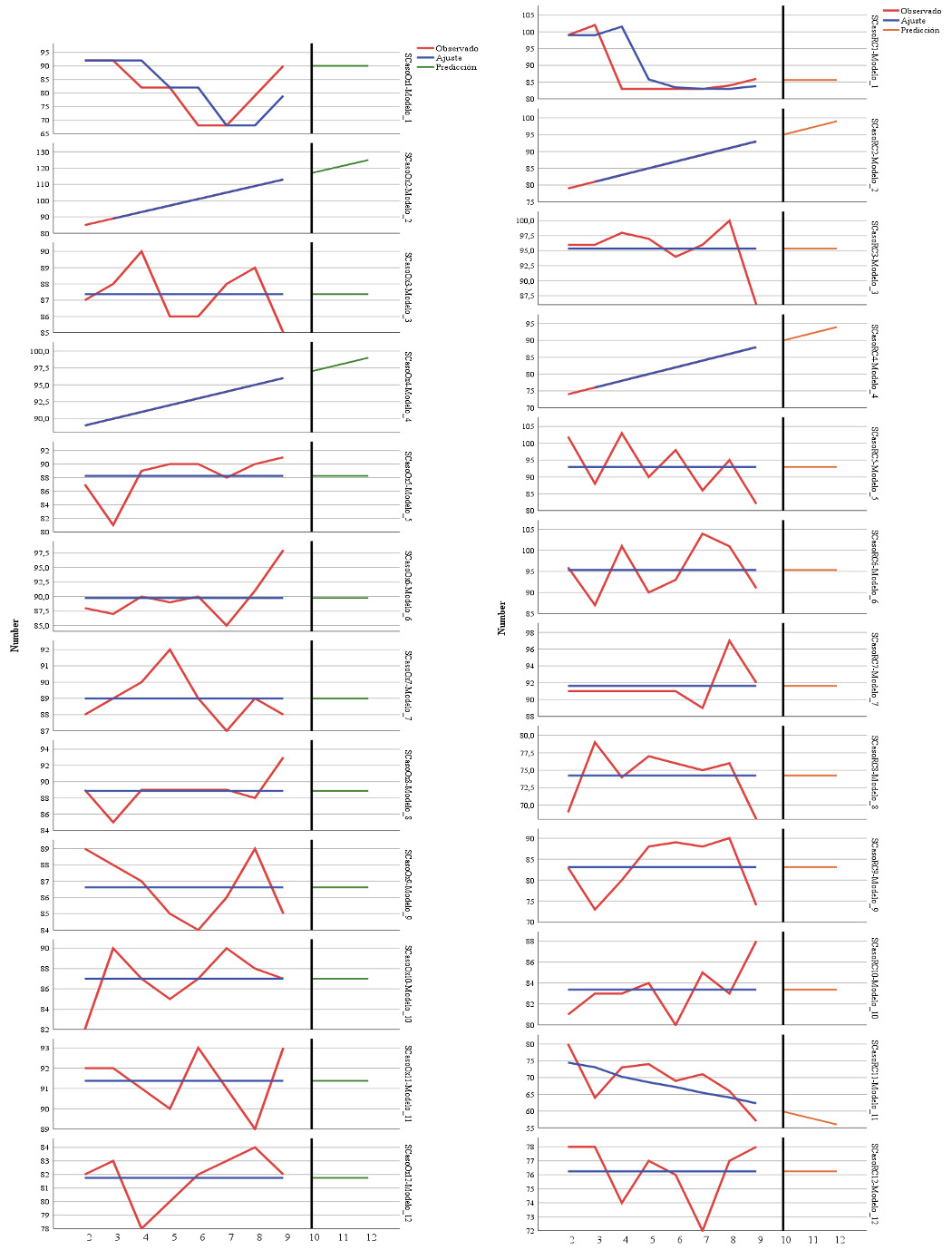
The 12 solution-focused interviews, represented in the following 12 graphs in the first column, suggest a linear oxygenation, indicated by the green line in each graph (the red lines are the actual oxygen rates and the blue lines are the statistically adjusted oxygen rates). In the second and fourth graphs in the first column, a slightly increased oxygenation is noted, while the rest show a similar rate without change. But forecasting based on these data for the next three minutes, it is observed that the oxygenation level remains stable and does not go down or rise any further, establishing a stable change in the oxygenation level.
While the heart rate on the second column shows a tendency to drop, but irregularly during the interviews, except for in the second, fourth, seventh, and tenth. For all cases, the predictions made after three minutes show no variance to its previous state. Based on the data collected, a downward trend is mostly observed and this change, apparently with the forecast data, remains stable for the next three minutes after the interview.
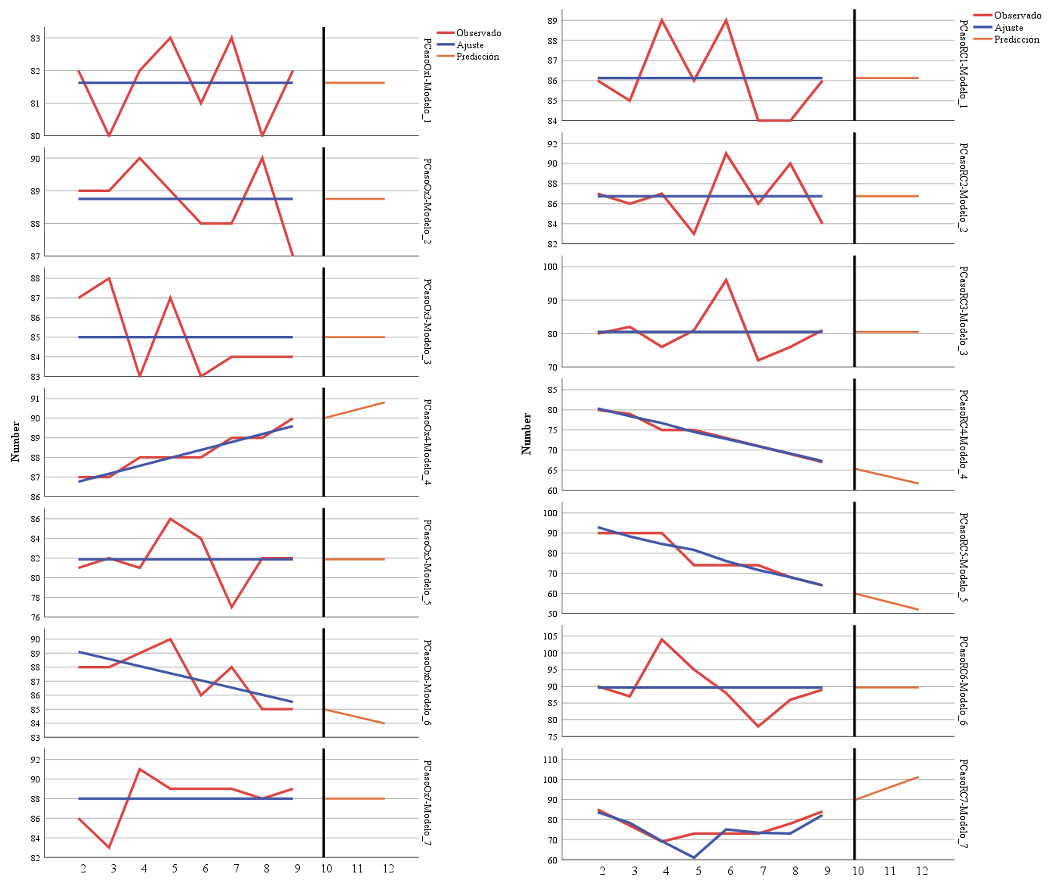
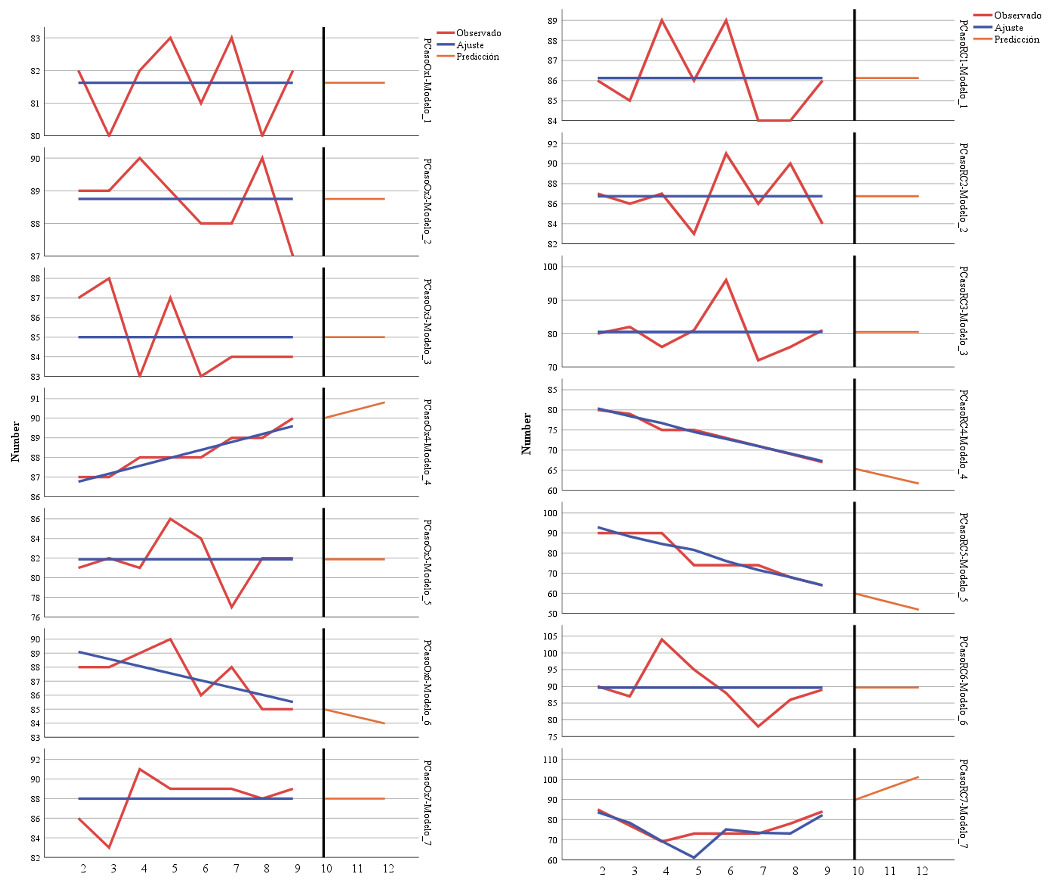
The problem-focused group graphs in the first column suggest that the level of oxygenation tends to go down, except for the fourth and seventh interviews. These data are reflected with those obtained (red line) and adjusted (blue line). For the other cases outside of figures four and seven, the oxygenation trends seem to decrease. Predictive statistics established with the green lines suggest oxygenation levels will be maintained, despite the change introduced in the previous minutes, so it does not go up or down.
The predictions for heart rate in the second column indicate that the rates tend to go down except for the last case. This is mainly reflected in the data represented by red lines, although this is unstable and there are moments that tend to rise.
DISCUSSION
Interviews in Aymara Indigenous Communities
The Aymara indigenous communities within this study are from the Bolivian altiplano region specifically from Viacha, Laja, and Tiwanaku. These communities are mainly engaged in agriculture and commerce. They have their own way of organizing where the leaders enjoy great prestige and confidence for decision making. The notion of violence and the processes to fight against it have a profound contrast with what the Bolivian state is designing, it is the community authorities themselves who resolve various conflicts, but it is expected that the laws against violence be enforced in these towns, similar to in the cities.
Given this cultural contrast, there is a need to study the process of conducting interviews for the prevention of violence. Two types of interviews have been identified. The first type is a psychoeducational process that focuses on the problem and is similar to other studies such as Grant (2012) or Koorankot et al. (2022). During this process, community members are explained and taught about violence and its prevention by an expert interviewer, typically from an urban area. In this setting, community members play a more passive role. The second type of interview is solution-focused, where individuals are encouraged to describe the desired transformation they seek and its impact on their lives. Other studies said the same Pérez Lamadrid and Froerer (2022).
Benefits and Challenges of Problem-Focused Interviews
The results of this study indicate that during problem-focused interviews for violence prevention, there is a consistent maintenance of oxygenation levels at their maximum, minimum, and average levels, accompanied by a decrease in heart rate. These findings suggest that discussing the causes, context, and consequences of violence does not lead to relaxation, but rather increases tension, aligning with the findings of Cohen et al. (2002).
According to the Broaden and Build Theory (Fredrickson, 2012) it may be inferred that focusing solely on violence within a legal framework could result in participants experiencing tension and negative emotions. This tension arises from the power dynamics between the expert interviewer and the individuals seeking to learn new strategies beyond their existing knowledge. Consequently, the understanding of violence becomes limited, reinforcing the roles of victim and perpetrator, thereby restricting the individuals’ agency and minimizing the relevance of their community resources for addressing the issue.
This phenomenon becomes particularly pronounced during the interviews, specifically between the 5th and 6th minute, when participants are asked about specific characteristics or requested to provide examples of violent situations. This marks a critical turning point in the conversation, leading to a crisis in the individual’s emotional state, which can be attributed to the professional. It is crucial to consider the conversation not solely from a causal perspective, as there may not be a specific question triggering these physiological changes. However, it is evident that when participants reach the stage of disclosing their experiences of violence or describing specific instances of violence they have encountered, a statistically significant change in their physiological responses occurs.
However, when comparing the oxygen levels and heart rate, it is evident that this moment of tension is not favorable for the participants and does not contribute directly to improving their situation. On the contrary, it may exacerbate their distress, hindering their ability to calm down or find comfort and hope. This aligns with the findings proposed by Walker, Froerer, and Gourlay-Fernandez (2021), emphasizing the importance of generating positive emotional experiences. By creating a positive emotional spiral, participants can activate internal resources and skills within a pragmatic framework of action. This, in turn, leads to a subsequent spiral of positive emotions, expanding their perspective on the situation and increasing their perception of available options for combating or preventing violence.
Benefits and Challenges of Solution-Focused Interviews
On the contrary, interviews that adopt a solution-focused approach exhibit a noticeable trend. The oxygen levels show an increase while the heart rate decreases, indicating positive health indicators (Gutiérrez Muñoz, 2010; Moya et al., 2013). This suggests a state of tranquility and improvement in the participants (Carter & Kingsbury, 2022). It implies that discussing violence within a solution-focused framework, which involves envisioning preferred futures, identifying moments of change, and exploring alternative actions, generates a positive change in the individual.
Furthermore, in alignment with the Broaden and Build Theory (Fredrickson, 2012), participants engaged in solution-focused interviews for violence prevention experience positive emotions when they describe the presence of their desired outcomes in their daily lives. This process expands their perception of their experiences and connects them with their own inner resources, promoting a sense of empowerment and agency.
This phenomenon may be attributed to the presence of hope and the discovery of a positive perspective within the discourse, which serves as an invitation to take action with therapeutic implications. Notably, this effect is particularly pronounced between the 7th and 8th minutes in terms of oxygenation, indicating a consolidation of these positive reflections towards the end of the interview, just before its conclusion. Similarly, the heart rate exhibits a significant change, reaching its lowest point approximately one minute later, between the eighth and ninth minutes.
The dynamics of the solution-focused interview, characterized by a co-constructive approach where the interviewer’s next question is based on the client’s previous answer, make it challenging to establish a direct correlation between a specific question and the corresponding changes in oxygenation and heart rate. However, it is possible to identify the stage and type of questions being asked within the interview structure. In solution-focused interviews, the significant change occurs during the Description stage, more precisely in the Preferred Future phase when interactive questions are utilized, as outlined by the Diamond structure.
Moreover, it is important to consider that the variability in oxygenation levels and heart rate is not of significant magnitude, as the cases exhibiting variations account for less than a quarter of the total sample size. Therefore, the data presented in the study is primarily based on 70% of the collected data.
Notably, a discernible pattern emerges regarding the occurrence of significant changes analyzed on a minute-by-minute basis during both interview sessions. The pattern suggests that there is a consistent sequence: first, a significant change is observed in oxygenation, followed by a subsequent minute where a significant change in heart rate occurs. This pattern lends a certain level of reliability to the analysis conducted in this study.
An additional factor contributing to the reliability of the study is the predictive analysis conducted, which reveals that the observed data patterns in problem-focused interviews are likely to persist in the subsequent 3-minute analysis period. Specifically, when discussing the problem, there is a tendency for oxygen levels to remain stable, while the heart rate shows a consistent decrease. This predictive analysis suggests that this trend is likely to continue. Similarly, in solution-focused interviews, there is a degree of consistency between the reported frequencies and the predicted outcomes. Participants tend to exhibit increased oxygenation levels while displaying irregular changes in heart rate, deviating from a consistent pattern.
Furthermore, several studies show that the early establishment of alliance, expectations, and engagement with the conversation impact the overall outcome of therapeutic conversations (Kort et al., 2021; Wampold & Imel, 2015). This study further corroborates this notion by identifying significant changes in both oxygenation and heart rate within the initial 10-minute timeframe. Whether it is a traditional therapy session or a violence prevention process, such as in the case of this study, any conversation exerts an immediate influence on individuals. Therefore, it is crucial for advocates of violence prevention campaigns to recognize the importance of their approach and allocate resources towards adequately training interviewers. This is particularly pertinent when considering campaigns conducted in rural areas of Bolivia. We might also note that historical assumptions about the need for 50 minute sessions, which may be seen as coming from a privileged position, are challenged by these results.
Conclusion
This study possesses unique characteristics, as the interviewers form teams to engage with communities, conducting conversations in diverse settings such as squares, orchards, school classrooms, soccer fields, and fairs. It is crucial to note that the primary language in these communities is Aymara, while Spanish serves as the secondary language. Additionally, it is worth mentioning that the concept of mental health and psychotherapy is not widely familiar or prevalent in these regions of the country. In this context, the study emphasizes the significance of language usage and highlights that conversations, regardless of their nature, have a portable nature. However, it also underscores the inherent differences in the processes and physiological responses associated with these conversations, highlighting the importance of understanding and adapting to the specific cultural and linguistic contexts of these communities.
This study seeks to explore and compare the processes involved in both types of interviews, not to determine which approach is superior, but to identify elements that may enhance their quality. By examining their distinct dynamics, the research aims to deepen understanding of how each interview functions and what contributes to its effectiveness. Ultimately, this study expands knowledge about the nature and impact of these approaches, offering meaningful insights to inform future interventions and professional practice.
Both solution-focused and problem-focused interviews can generate transformative shifts in individuals, and this change appears to unfold cumulatively over the course of the conversation. The process begins with the relational dynamic established between the interviewer and interviewee, which sets the tone and direction of the exchange. In problem-focused interviews, the central theme typically revolves around the absence or prevention of violence, emphasizing the identification, understanding, and reduction of problematic behaviors. In contrast, solution-focused interviews center on the presence of well-being, highlighting strengths, preferred outcomes, and desired futures. As the conversation progresses, these guiding themes become increasingly salient, reinforcing their respective orientations. Over time, this sustained focus contributes to a cumulative transformative effect, shaping how individuals perceive themselves, their circumstances, and their possibilities for action.
The absence or avoidance of a problem and the active cultivation of well-being or solutions involve fundamentally different mechanisms. From the perspective of well-being theory, solution-focused interviews can be understood as health-promoting processes, given the well-documented association between higher levels of well-being and improved physical and psychological health. Within this framework, engaging in solution-focused conversations may support more regulated physiological states, such as slower, more relaxed breathing, which contributes to an overall sense of calm and well-being. By directing attention toward strengths, possibilities, and desired outcomes, these interviews foster conditions that are not only psychologically constructive but also physiologically supportive, promoting a healthier and more adaptive state for participants.
Examining well-being through the lens of bioinformational theory highlights how this cumulative process enables individuals not only to recognize experiences of well-being but also to enhance the skills and resources that sustain it. Particularly significant is their ability to articulate how they would engage with others and participate in their communities from a place of well-being.
This deeper exploration allows individuals to envision and describe preferred ways of interacting, strengthening their sense of agency and activating their existing capacities and potential. In this way, they become active architects of their own well-being while cultivating more intentional, harmonious connections within their communities.
It is strongly recommended to move beyond a sole focus on problems and instead facilitate processes that help clients activate their resources, envision a preferred future, construct solutions, and set meaningful goals within therapeutic or educational interventions. These processes are consistent with the approaches outlined by Grant et al. (2012) and Smock et al. (2010). By situating problems within a broader temporal and contextual framework, it becomes equally important to prioritize discussions of potential solutions. Treating solutions as central guiding axes creates pathways for meaningful change and empowers individuals to navigate their lives proactively toward positive outcomes. Consequently, integrating solution-focused strategies alongside problem-focused discussions is essential for fostering transformative progress.
Limitations and Future Research
It is important to acknowledge several limitations of this study. First, the research was conducted with a relatively small sample size, which may limit the generalizability of the findings. The various types of violence that are experienced was not the focus of this study, and confounding findings may have resulted. Additionally, participation was voluntary and offered no direct incentives, which could have introduced bias in the composition of the sample. We also acknowledge that only looking at oxygenation and heart rate may give only a narrow perspective or overall well-being.
For future research, it would be valuable to conduct a more differentiated analysis that considers the unique characteristics of each indigenous community. Such an approach would deepen understanding of the dynamics of violence and help identify strategies that are culturally and linguistically congruent. Ultimately, this would support the development of more effective, culturally sensitive interventions for violence prevention within these communities.
Furthermore, it is essential to highlight the importance of continuing this line of research with a focus on differentiating the various types of violence present in indigenous communities. Such differentiation would allow for a more precise evaluation of the effectiveness of problem-focused and solution-focused interviews in addressing specific aspects of violence prevention. By pursuing further studies in this direction, researchers can gain deeper insights into the nuanced dynamics of these interview approaches and their appropriateness for different contexts. These efforts would improve our understanding and offer valuable guidance for designing interventions that are tailored to the unique needs and challenges of each community.
We also recommend future research could conduct qualitative research to explore participants’ perceptions of the questioning approach. Future studies should also consider including additional indicators beyond oxygenation and heart rate, examining other relevant physiological variables. We recommend incorporating additional instruments to measure oxygen saturation and heart rate, along with extending study durations to assess well-being beyond 15 minutes. It may also be beneficial to collect physiological data outside the interview context—either before or after sessions—to obtain a more comprehensive picture. Furthermore, it is advisable to test the interview methodology alongside alternative interview approaches, as well as within the context of prevention efforts.